Permanent Output Losses From the Pandemic

Divergent recoveries  are leaving “lasting imprints”, with emerging and developing economies suffering deeper medium-term damage than advanced countries, on average. Most countries are now forecast to have lower GDP in 2024 than projected in January 2020 before the pandemic. This is different from crises associated with industrial or financial cycles common in history because, in those cases, in general, some period of above normal or trend growth will have occurred previously. In the pandemic there has been only the loss side.

Continue ReadingPermanent Output Losses From the Pandemic

The Road to Decarbonization

It will be necessary to accelerate the pace of global containment of carbon emissions if the expected increases in global average temperatures are to be kept below 2 or 1.5 degrees Celsius, with correspondingly less-dramatic climatic consequences. The transition to zero emissions will involve three simultaneous economic processes: change in the relative prices of goods and services, with prices starting to reflect the intensity of emissions of carbon; labor relocation; and asset value scrapping. The socioeconomic return from decarbonization must include preventing heatwaves, floods, hurricanes, droughts, floods, and storms like those of this year from becoming even more intense and frequent, the cost of which would involve even higher GDP losses for nations.

Continue ReadingThe Road to Decarbonization

Emerging market capital flows after Covid-19

With loose money supply and low returns in the developed world, emerging markets have become the destination of choice for investors looking for high yields. However, with much uncertainty remaining and inflation well above the Federal Reserve’s target rate, speculation of Fed tapering and market tantrums are gaining momentum. OMFIF is convening a panel to look at capital flows in emerging markets, addressing what happens when the cycle turns, the likelihood of capital flows reverting and asset and currency markets in the developing world.

Continue ReadingEmerging market capital flows after Covid-19

Helicopter Reserves to the Rescue

A new allocation of US$650 billion in Special Drawing Rights (SDRs) by the International Monetary Fund (IMF) to its member countries has entered into force last Monday. The extraordinary character of the allocation initiated this time is seen in the fact that its amount corresponds to more than double the sum of all allocations made to date. As allocations follow country IMF quotas, relief for those in need of reserves will come as an excess in other cases. The IMF set out to find ways in which countries with SDR surpluses can voluntarily channel them to those in need.

Continue ReadingHelicopter Reserves to the Rescue

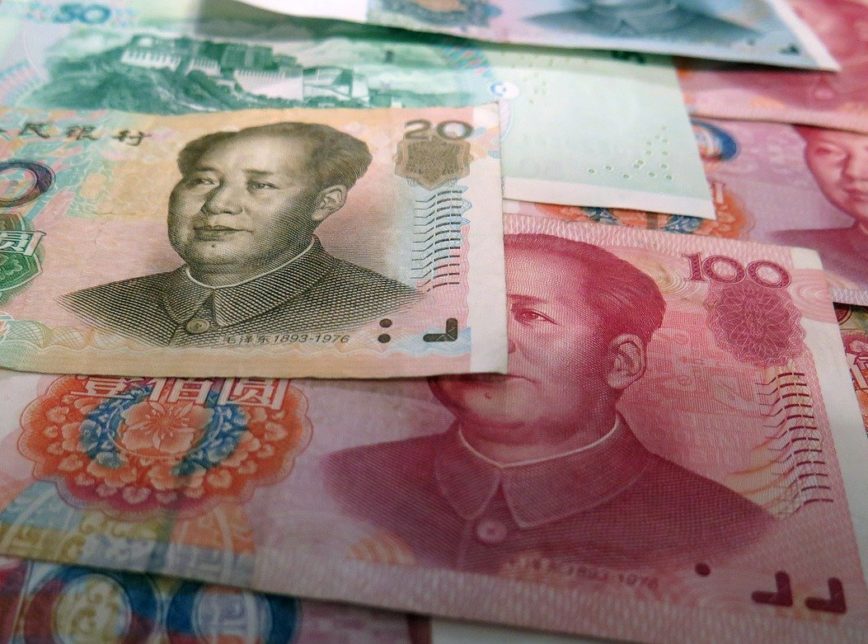
China’s renminbi needs convertibility to internationalize

Commercial transactions and reserves of central banks and other global public investors could strengthen the position of the Renminbi as an alternative currency to the dollar, euro, yen and pound sterling. However, the qualitative leap towards the internationalization of the Chinese currency as a full reserve currency will only happen when confidence in its convertibility is sufficient to convince unofficial (private) investors to hold much more reserves denominated in it.

Continue ReadingChina’s renminbi needs convertibility to internationalize

Lost in transition: developing countries in the global economy

The growth and productivity performance of emerging market and developing economies since the 2008 global financial crisis failed to repeat the achievements of the previous decade. Besides frustrating expectations that they might become the new growth pole in the global economy, their convergence to per capita incomes of advanced economies has suffered a setback. Nonetheless, the path of policies and reforms to be pursued in that direction remains the same. This is something accentuated by the coronavirus pandemic crisis.

Continue ReadingLost in transition: developing countries in the global economy

The Global Economy and the Pandemic

There remains tremendous uncertainty and prospects of a post-pandemic recovery vary greatly across countries, as it is bound to happen at different paces. And the divergence of per capita incomes in the world is rising as an aftermath of the pandemic. The pandemic will leave scars in labor markets and income distribution, besides higher public debts as a legacy. A higher pace of automation of jobs, as well as a partial reversal of globalization are also to be expected.

Continue ReadingThe Global Economy and the Pandemic

Are We on the Verge of a New Commodity Super-Cycle?

Some analysts have started to speak of the possibility of a new commodity price ‘super-cycle’ after the downturn since 2011. Although it is always possible to find moments of joint fluctuation, in which commodities remain for a long time above or below their long-term trends, differences among them matter. Copper is King! It is in metals, especially copper, lithium, and rare earth ones, that a strong bullish cycle is most evident.

Continue ReadingAre We on the Verge of a New Commodity Super-Cycle?

Commodity Price Cycles

Commodity prices go through extended periods during which prices are well above or below their long-term price trend. The upswing phase in super cycles results from a lag between unexpected, persistent, and upward trends in commodity demand, matched with a typically slow-moving supply. Eventually, as adequate supply becomes available and demand growth slows, the cycle enters a downswing phase. The latest super-cycle of commodity prices, starting in the mid-90s, reaching a peak by the time of the global financial crisis, and getting to the bottom by 2015, can be seen as associated to the developments of globalization that we have already dealt with in this series. More recently, some analysts have spoken that we might be on the verge of a new cycle, super-cycle or not.

Continue ReadingCommodity Price Cycles

Financial Globalization

Financial integration of countries and financial globalization led to an extraordinary rise of foreign assets and liabilities as a share of GDP, followed by stability of total flows since the global financial crisis of 2008-2009. The apparent stability has been marked by an underlying metamorphosis of cross-border finance, with de-banking and rising foreign direct investment and non-banking financial flows. Blind spots and potential instability remain.

Continue ReadingFinancial Globalization

Global current account imbalances

After peaking in 2007 at around 6% of world GDP, global current-account imbalances declined to 3% of world GDP in the last few years. But they have never left entirely the spotlight, albeit acquiring a different configuration from that which marked the trajectory prior to the global financial crisis (GFC). This is not because they threaten global financial stability, but mainly because they reveal asymmetries in adjustment and post-GFC recovery between surplus and deficit economies, and because of the risk of sparking waves of trade protectionism. They also reveal the sub-par performance of the global economy in terms of foregone product and employment, i.e. a post-crisis global economic recovery below its potential.

Continue ReadingGlobal current account imbalances

Bloated Central Bank Balance Sheets

There are good reasons to believe that there will be no return to the pre-QE configuration of balance sheets. First, the increasing global financial integration in the last few decades has imposed increasing challenges in terms of making liquidity management effective as cross-border volumes of capital flows have expanded significantly. Second, changes to financial regulation have induced private agents to alter their behavior and strategies. Finally, a new task has come under the purview of central banks: monitoring relationships between various benchmark curves—i.e., operating as quasi-market makers. As a spill-over from abroad, central bank balance sheets in some emerging market economies also bloated. The era of bloated central bank balance sheets seems to be a component of the “new normal”, even if they undergo some diet in the future.

Continue ReadingBloated Central Bank Balance Sheets

Secular Stagnation and the Big Balance Sheet Economy

Private balance sheets have risen relative to GDP in advanced economies in the last decades, in tandem with a trend of decline in long-term real interest rates. Asset-driven macroeconomic cycles, along with a structural trend of rising influence of finance on income growth and distribution, have become part of the landscape. Underlying secular trends of stagnation may also be suggested, making the macroeconomic dynamics dependent on the balance sheet economy getting bigger and bigger.

Continue ReadingSecular Stagnation and the Big Balance Sheet Economy