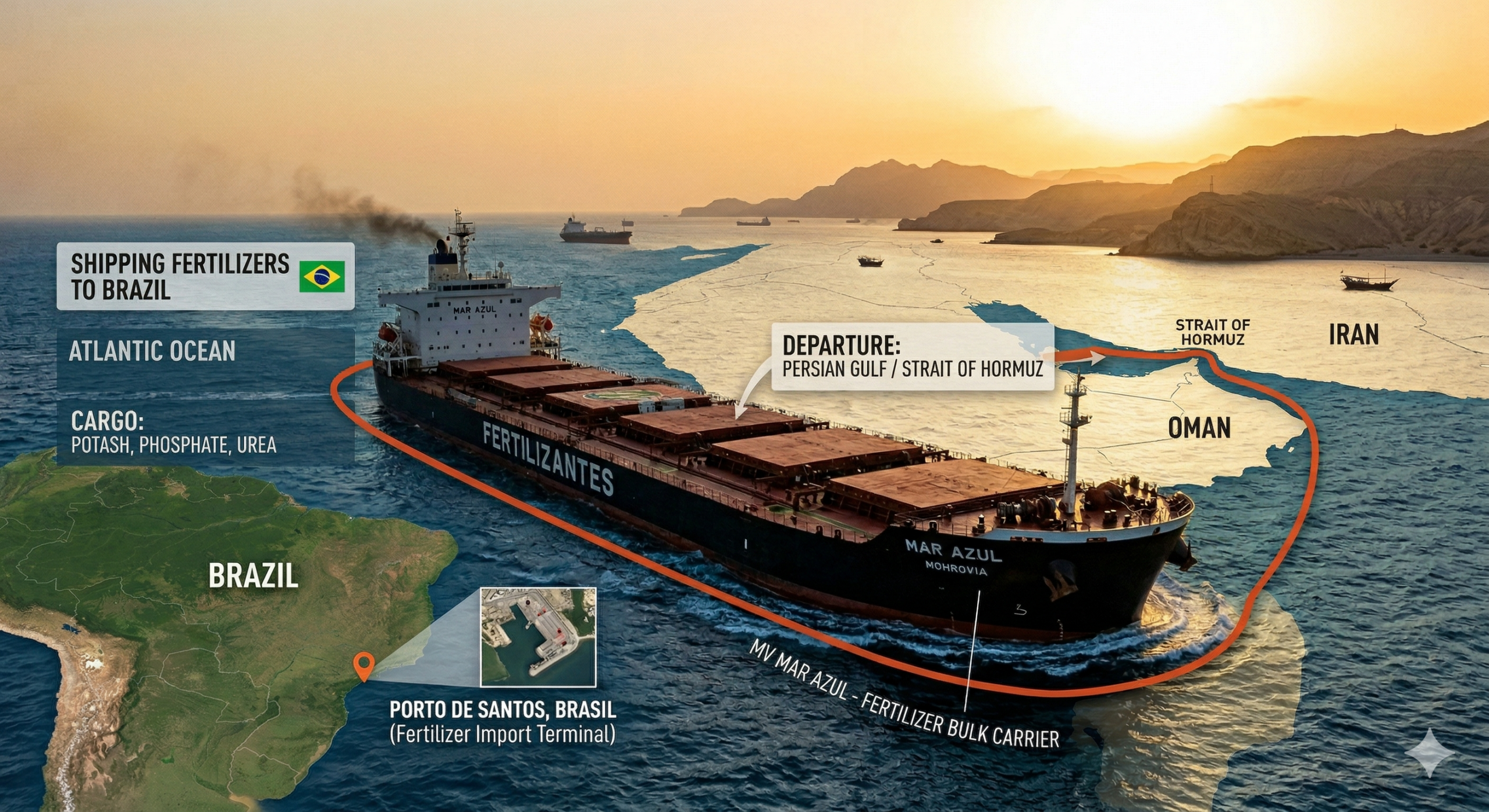
Transmission Channels of the War on Iran to the Brazilian Economy
Diesel and fertilizers are the most concerning transmission channels of the Middle East conflict for Brazil

Diesel and fertilizers are the most concerning transmission channels of the Middle East conflict for Brazil
Brazil went from a quite impressive economic performance during much of the twentieth century to a period of mediocre growth from 1980 onwards. This shift has positioned the country as a textbook case of the “middle-income trap”. This paper aims to demonstrate how certain transformations in the international economy since the 1980s—notably the globalization of firms and industries—combined with a set of domestic challenges, disrupted the path of industrial and technological development that Brazil had pursued since the 1930s. In essence, growth strategies based on the scale of the domestic market ceased to be effective. The innovation and economic challenges the country now faces cannot be addressed without a clear understanding of these processes. The analysis carries important policy implications, centered on the need for less protectionism and greater internationalization of firms. Reversing the inward-looking orientation of Brazilian industry is a key objective for any policy aiming to stimulate increased business R&D and innovation.

The costs of Brazilian tariff retaliation would likely be high for its economy, because of risks of even higher U.S. tariffs and because of Brazil’s domestic use of current imports from the U.S. At the same time, it is unimaginable that Brazil will fall into the trap of accepting a ‘political’ negotiation plan. Brazil will have to count on some eventual support from U.S. domestic opponents of the tariffs, in addition to any other trade matters that may come up in bilateral conversations between Lula and Trump that may take place in the near future. Beyond that, Brazil will just have to bite the bullet.

Despite the exercise of BRICS balancing act, President Donald Trump threatened "extra 10% tariff over ‘anti-American’ BRICS policies". And, last week, he threatened to impose a 50% tariff on Brazil, making references to the legal process against former President Jair Bolsonaro for a planned coup plot, as well as to measures taken by Brazil’s Supreme Court against U.S .social media platforms. Presumably, from Mr. Trump’s perspective, pursuing lower reliance on the US dollar was enough to push Lula and the BRICS off their balancing act.
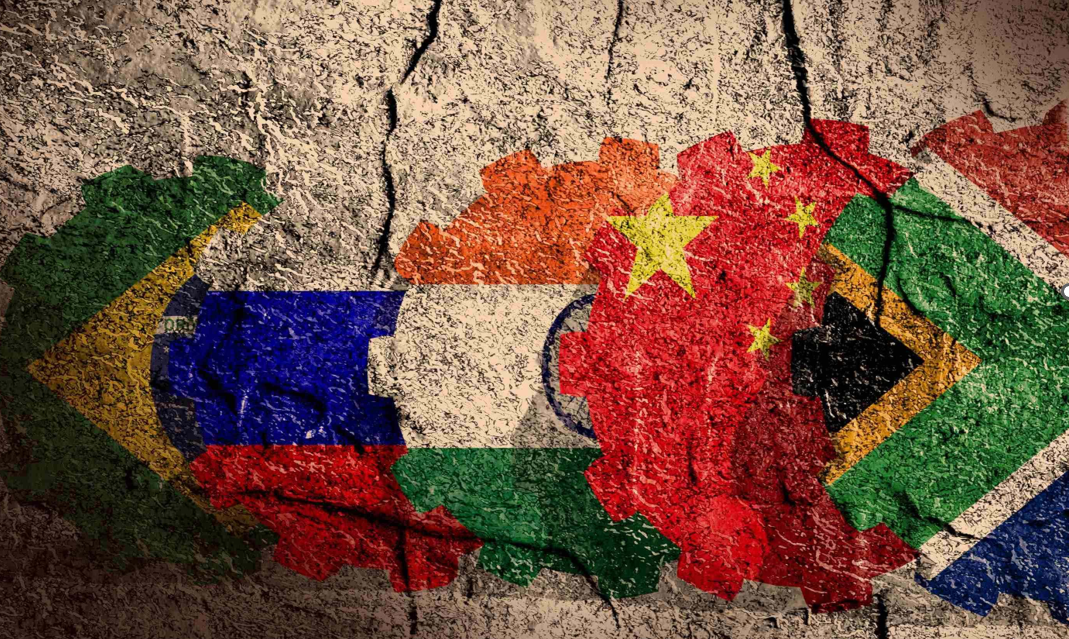
Este artigo avalia o desempenho das economias originais do BRICS relativamente às projeções de crescimento e apreciação cambial apresentadas nos artigos que lançaram o acrônimo antes de o agrupamento se tornar uma realidade diplomática, política e econômica. Na sequência, discutimos a agenda BRICS no atual contexto geopolítico desafiador, no qual a fragmentação econômica tende a elevar custos para a economia mundial e apresenta obstáculos consideráveis para economias emergentes e em desenvolvimento.
This paper aims to demonstrate how certain transformations in the international economy since the 1980snotably the globalization of firms and industriescombined with a set of domestic challenges, disrupted the path of industrial and technological development that Brazil had pursued since the 1930s. In essence, growth strategies based on the scale of the domestic market ceased to be effective. The innovation and economic challenges the country now faces cannot be addressed without a clear understanding of these processes. The analysis carries important policy implications, centered on the need for less protectionism and greater internationalization of firms. Reversing the inward-looking orientation of the Brazilian industry is a key objective for any policy aiming to stimulate increased business R&D and innovation.

This paper examines Brazil's economic growth patterns over the last three decades and identifies a missed opportunity for the country to attain high-income status by the mid-2010s. Instead, Brazil has suffered from low productivity growth, and has made little progress in transforming its production and export structures in favor of higher value-added activities. This premature de-industrialization makes it challenging for Brazil to transition from its long-standing upper-middle-income status. Brazil now has a limited, two-decade window to catch up with high-income nations before losing its demographic dividend, potentially leaving the country with an aging population without achieving high-income status. Therefore, it is crucial for Brazil to raise productivity growth through competition policies, and by embracing technological change. Achieving this goal requires comprehensive trade reforms to improve domestic competition, and to harness technology advancements effectively. This paper discusses key elements of such a policy framework within the broader context of a development strategy aimed at breaking free from the middle-income trap.
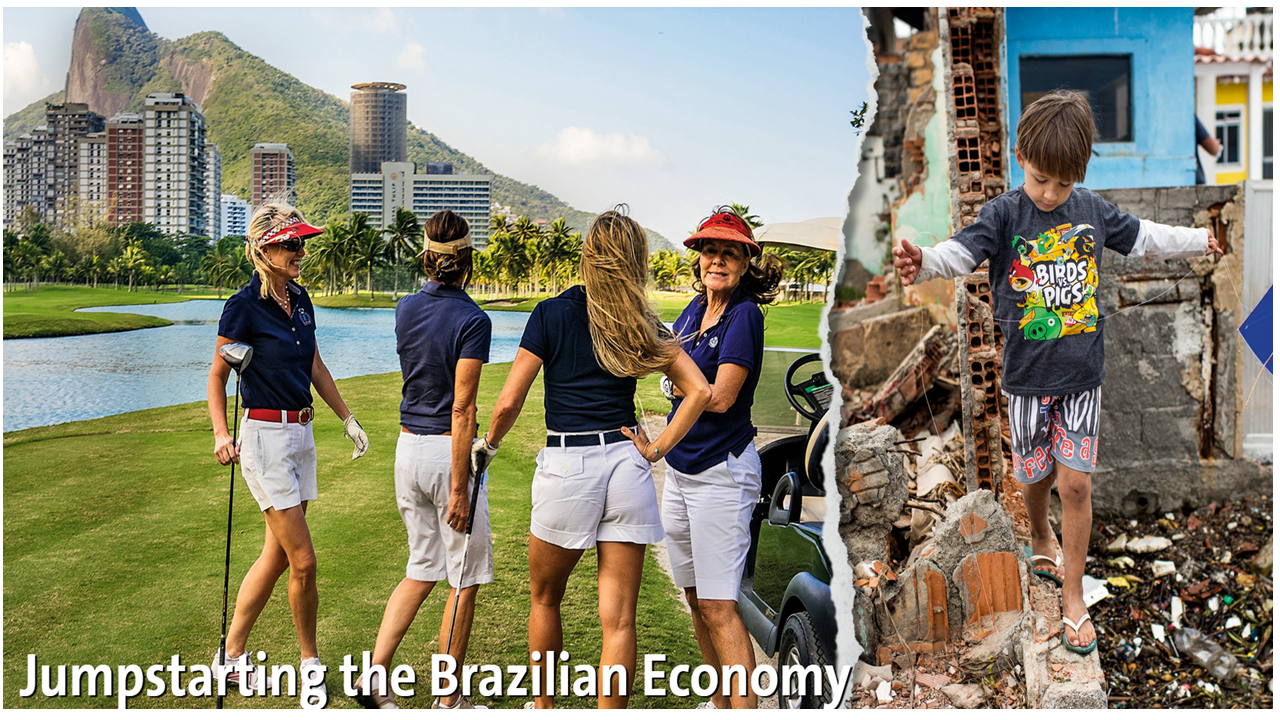
Everything about Brazil is oversized – the population (at 217 million, the largest in Latin America), the land mass (fifth largest on earth) and by almost everyone’s reckoning, the economic potential. But so, alas, are its chronic problems that range from a lack of economic mobility to social divisions that undermine its capacity to make collective sacrifices in the quest for prosperity. There are signs – there have long been signs – that Brazil could pull itself up by the bootstraps. Much of the world rides in passenger jets made in Brazil, works in office buildings erected with Brazilian steel, eats soy grown in Brazil and learns from Brazil’s expertise in extracting oil in ultra-deep waters. Three of the eight largest hydropower installations on earth are located in Brazil, and more than half of Brazil’s energy consumption is derived from renewable sources. But to turn promise into plenty, Brazil needs to make hard decisions that prioritize growth and poverty reduction over the care and feeding of entrenched interest groups. It won’t be easy – but the gains would be worth the pain.

At the origin of deforestation, there is a problem of what economists call ‘microeconomic incentives’, that is, the (risk-weighted) costs and benefits for the perpetrators. Avoiding forest damage means acting on this calculation. Having bills approved is not enough. For deforesters to take them into account in their calculations, enforcement must be effective. The risk-adjusted cost-benefit calculation favors compliance with the law only when, in case of disobedience, the probability of capture and significant punishment are sufficiently high.

The insurrection in Brazil's capital shows what can happen when democracy is understood merely as a process, rather than as a core value. While Brazilian democracy is not immediately at risk, its long-term future now depends on how its warring political camps navigate the fallout of January 8.
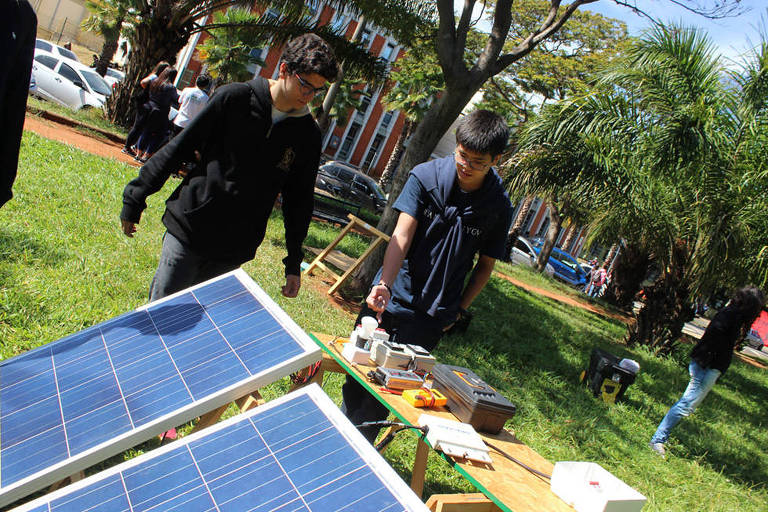
Experiências aqui abordadas ilustram bem tanto a necessidade das chamadas "instituições que fazem a ponte entre ciência e inovação", quanto os ganhos decorrentes de esforços de pesquisa científica em universidades ou instituições de pesquisa. Esforços de contenção fiscal precisam incluir um reordenamento de gastos que preserve e amplie investimentos em ciência

1. Emerging Markets: Economic and Geopolitical Fragmentation 2. LatAm in Focus: How Latin America Is Fighting Inflation 3. Sustainability (Soaring Fertilizer Prices; Brazil's Commitment to Sustainability; UN sustainability goals and developing countries) 4. Slowbalization, Reshoring, Nearshoring, & Friendshoring

The COVID-19 pandemic brought a halt to the expansion of Latin America’s middle class and pushed millions back into poverty. Reversing this pattern requires addressing the region’s vulnerability to economic shocks and strengthening countries’ resilience.
The Brazilian economy has been suffering from a double disease in the last few decades: a combination of anemia in productivity increases and an obesity of the public sector. On the one hand, the mediocre performance of productivity in Brazil in recent decades has limited its GDP growth potential. On the other, the expansion of public spending has become increasingly incompatible with such limits on the potential expansion of GDP, particularly since the growing public spending has not achieved commensurate socioeconomic results.
The middle-income trap may well characterize the experience of Brazil and most of Latin America since the 1980s. Conversely, South Korea maintained its pace of evolution, reaching a high-income status. Such divergence of economic growth can be related to their distinctive performances of domestic accumulation of technological and organizational capabilities. Their different approaches to global value chains and trade globalization reinforced such discrepancy in domestic accumulation processes.