Public financing of green innovation: Matchmaking of offers and demand for financing + Economic and Political Impacts of COVID-19 on BRICS Countries

Public financing of green innovation: Matchmaking of offers and demand for financing - Relevant recent literature states that direct and pervasive public financing has been instrumental in the development of innovative technological trajectories. The reasoning builds on: (i) the presence of finance from public sources across the entire innovation chain; (ii) the concept of ‘mission-oriented’ policies that have created new technological and industrial landscapes; and (iii) the entrepreneurial and lead investor role of public actors, willing and able to take on extreme risks, independent of the business cycle. On the other hand, public financing depends largely on the availability of funds. The available capital (human or otherwise) for different jurisdictions is different, which may motivate a case for heterogeneity of policies regarding innovation funding. ------------------- Economic and Political Impacts of COVID-19 on BRICS Countries The event, organized by GEBRICS/USP and the Department of International and Comparative Law (DIN) of the Faculty of Law, University of São Paulo, aims to bring together professors, researches, specialists and diplomatic representatives from all BRICS countries

Continue ReadingPublic financing of green innovation: Matchmaking of offers and demand for financing + Economic and Political Impacts of COVID-19 on BRICS Countries

Whither Interest Rates in Advanced Economies: Low for Long?

The action of central banks has been more reactive than proactive, more reflex than cause, and in their absence, macroeconomic performance would have been even more mediocre than it has been. There is a mismatch between the trend of increasing stocks of financial wealth, occasionally cut by shocks and crises, and the creation and incorporation of new assets accompanying economic expansion. COVID-19 is helping reinforce such trends.

Continue ReadingWhither Interest Rates in Advanced Economies: Low for Long?

Por que os juros nas economias avançadas continuarão baixos

A ação de bancos centrais das economias avançadas tem sido mais reativa que proativa, mais reflexo do que causa, e na ausência dela o desempenho macroeconômico teria sido ainda mais medíocre do que o verificado. O fato é que as taxas de juros reais –de curto e longo prazos– vêm declinando há décadas, ao longo das quais bancos centrais tiveram de responder a vários choques. Como não houve aceleração inflacionária, pode-se presumir que as taxas “naturais” de juros –aquelas nas quais fluxos de poupança e investimentos estão próximos o suficiente para evitar que excessos de demanda ou de oferta provoquem inflação ou recessão– vêm caindo.

Continue ReadingPor que os juros nas economias avançadas continuarão baixos

Brazilian Economic and Political Outlook 2020/2021+ Economic Development and Global Value Chains Insertion: a view from Brazil and South Korea

Brazilian Economic and Political Outlook: The discussion about the Economic and Political Outlook 2020/2021, was moderated by John Welch, Executive Director of the Brazilian American Chamber of Commerce in NY, the Dunn Liberty Fellow in Economics at The King’s College, and Member of the Board of the Brazil-Canada Chamber of Commerce, with the participation of Christopher Garman, Managing Director at Eurasia, Andrea Gardella, Senior Economist at Export Development Canada and Otaviano Canuto, Principal, Center for Macroeconomics for Development. -------------------------- Economic Development and Global Value Chains Insertion: a view from Brazil and South Korea: Speakers: Otaviano Canuto - Senior Fellow at the Policy Center for the New South; Joonkoo Lee - Professor, Hanyang University. Moderator: Leonardo Paz Neves - Intelligence Analyst, International Intelligence Unit, Fundação Getulio Vargas

Continue ReadingBrazilian Economic and Political Outlook 2020/2021+ Economic Development and Global Value Chains Insertion: a view from Brazil and South Korea

China retorna ao caminho do reequilíbrio, por Otaviano Canuto

a economia global pós covid-19 reforçará a necessidade da China de acelerar o que ela própria chamou de “reequilíbrio” e, com a recuperação depois do mergulho profundo durante a pandemia, o foco se voltará para um retorno mais acelerado ao que estava ocorrendo anteriormente.

Continue ReadingChina retorna ao caminho do reequilíbrio, por Otaviano Canuto

BID, Multilateralismo, Brasil e Argentina

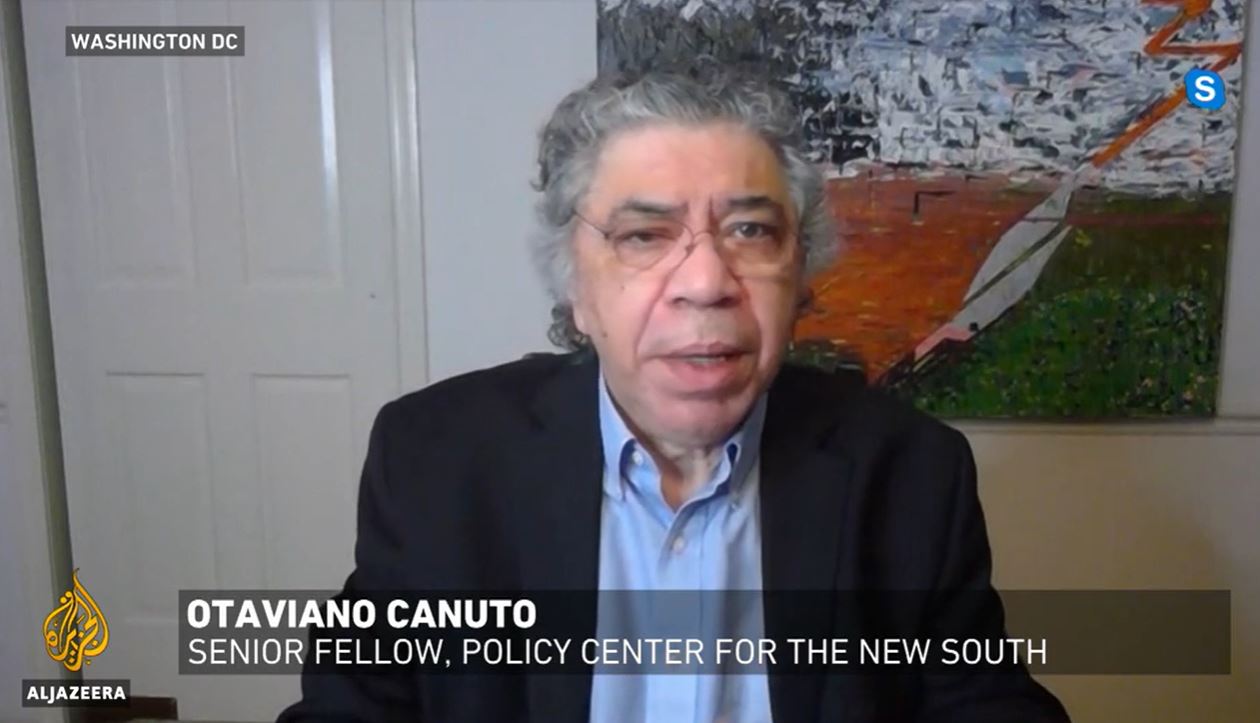
- O futuro do multilateralismo, as perspectivas para o mundo com a eleição nos EUA e o papel do Brasil na arena internacional. - O grande desafio para o BID vai ser conseguir um aumento de capital porque o espaço de empréstimos que existia foi em grande medida usado este ano - O Brasil estará numa encruzilhada em 2021. Se pegar o caminho errado, "vai virar uma Argentina", alerta o economista Otaviano Canuto. - Pandemia leva Argentina à nova crise cambial; economistas analisam situação

Continue ReadingBID, Multilateralismo, Brasil e Argentina

Africa’s Infrastructure Finance

Africa’s infrastructure investment gap has widened over time. Addressing the mismatch between developed countries’ “global savings glut” and African countries’ “investment dearth” might be a win-win. To facilitate that matching, some risk mitigation tools can be used. In this brief, we propose that by providing such risk mitigation tools, development institutions and governments can crowd-in private investment rather than crowd them out by providing full financing.

Continue ReadingAfrica’s Infrastructure Finance

Why is President Bolsonaro’s popularity on the rise in Brazil?

Despite downplaying the seriousness of COVID-19, Brazil’s president’s approval rating is at its highest since he took office. Brazil has the world’s second-highest number of coronavirus deaths after the United States. President Jair Bolsonaro’s dismissive stance has helped oversee the coronavirus’ rapid spread, with more than four million cases and 135,000 deaths rocking the country. Millions have lost their jobs and the economy is in recession. But support from the poor has made Bolsonaro’s popularity rocket to its highest level since he took office in 2018. So what is the reason for this?

Continue ReadingWhy is President Bolsonaro’s popularity on the rise in Brazil?

Dependency and disconnect of U.S. financial markets

U.S. stock and corporate bond markets performed extraordinarily well from the March financial shock caused by covid-19 to the end of last month. Then, three consecutive weeks of decline in the three major stock market indexes have been followed this week by a global slump attributed to fears of new lockdowns. A period of disconnect of financial markets with the underlying real economy has culminated in a revelation of the former’s high dependency to Federal Reserve policies.

Continue ReadingDependency and disconnect of U.S. financial markets

Dependência e descolamento nos mercados financeiros dos Estados Unidos

Entre o choque financeiro de março provocado pela Covid-19 e o final do mês passado, os mercados de ações e de títulos de dívida corporativa nos Estados Unidos exibiram uma performance extraordinária. Desde então, houve três semanas consecutivas de queda nos três principais índices de ações. O que está acontecendo?

Continue ReadingDependência e descolamento nos mercados financeiros dos Estados Unidos

Trump versus Biden e Brasil – Podcast AMERICA DECIDE e Webinar GENIAL INVESTIMENTOS

O Brasil cede às pressões do presidente Donald Trump e renova a cota de importação do etanol americano com tarifa zero, sem uma contrapartida clara por parte dos Estados Unidos. Enquanto isso, avançam negociações de um acordo comercial amplo entre os dois países. De sua parte, o candidato democrata, Joe Biden, fala em atrair de volta as indústrias americanas com incentivos fiscais e elevações de tributos para as que produzem no exterior. Pela primeira vez, o Banco Interamericano de Desenvolvimento é presidido por um americano, Mauricio Claver-Carone, que fala em deslocar as cadeias de valor do eixo Leste-Oeste para o Norte-Sul, envolvendo o Brasil. Para analisar essas questões, Lourival Sant'Anna, analista de internacional da CNN, conversa com Renata Amaral, especialista em comércio, diretora da American University, de Washington, e co-fundadora da organização Women Inside Trade; e com Otaviano Canuto, membro sênior do Policy Center for the New South e ex-vice-presidente do Banco Mundial, também em Washington. --------------------------------------- Trump ou Biden? O governo brasileiro faz campanha aberta pela reeleição do presidente americano Donald Trump. Mas e se o pleito colocar de volta à Casa Branca um democrata? Como Joe Biden vai tratar o Brasil? Com certeza, teríamos mais pressão por temas sociais e de direitos humanos, mas, na economia, o pragmatismo pode vencer. Vamos falar sobre o assunto com o ex-vice-presidente do Banco Mundial e membro sênior do Policy Center for the New South, Otaviano Canuto; com o economista-chefe para os Estados Unidos da SPX Capital, Rafael Magri; e com o economista-chefe da Genial Investimentos, José Márcio Camargo.

Continue ReadingTrump versus Biden e Brasil – Podcast AMERICA DECIDE e Webinar GENIAL INVESTIMENTOS

Covid-19 tem sido uma tragédia para a América Latina

A América Latina continua sendo o maior foco da pandemia global, atualmente respondendo por 41% das mortes globais após os aumentos nas fatalidades de covid-19 no Brasil, México e vários outros países da América Central e do Sul nos últimos meses. Por sua vez, os números das quedas do PIB no 2º trimestre de 2020 revelaram quão fortemente negativo foi o impacto da covid-19 nas economias da região. O quadro geral contém uma diversidade de condições entre os países e um desafio comum de evitar nova década perdida.

Continue ReadingCovid-19 tem sido uma tragédia para a América Latina
Read more about the article Don’t Expect Miracles From the Multilaterals
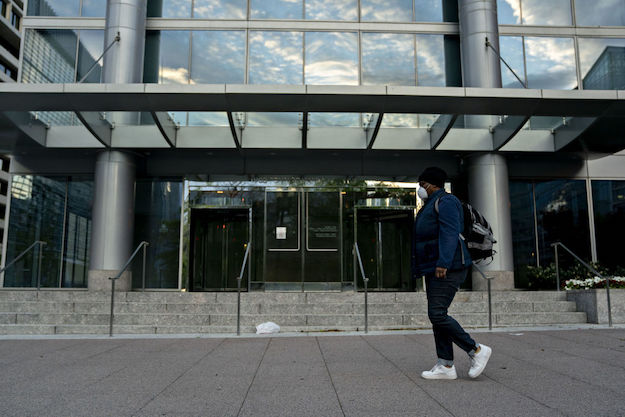
A pedestrian wearing a protective mask walks past the International Monetary Fund (IMF) headquarters in Washington, D.C., U.S., on Tuesday, April 14, 2020. In its first World Economic Outlook report since the spread of the coronavirus and subsequent freezing of major economies, the IMF estimated today that global gross domestic product will shrink 3% this year. Photographer: Andrew Harrer/Bloomberg

Don’t Expect Miracles From the Multilaterals

With Latin America and the Caribbean potentially facing years of difficulties due to the pandemic and related economic crises, attention has shifted to what multilateral institutions like the International Monetary Fund (IMF) might do to help. There’s no doubt they can play a crucial role in preventing another lost decade in the region. But these institutions will also face limitations because of capital constraints and other factors. 

Continue ReadingDon’t Expect Miracles From the Multilaterals

Brazil, South Korea: Two Tales of Climbing an Income Ladder

The “middle income trap” may well characterize the experience of Brazil and most of Latin America since the 1980s. Conversely, South Korea maintained its pace of evolution, reaching a high-income status. Such divergence of economic growth can be related to their distinctive performances of domestic accumulation of technological and organizational capabilities. Their different approaches to global value chains and trade globalization reinforced such discrepancy in domestic accumulation processes.

Continue ReadingBrazil, South Korea: Two Tales of Climbing an Income Ladder