Crisis Recovery: Flying on a Single Engine

Countercyclical moves by policy makers might have reduced the length and size of the observed output gap had fiscal policy operated as a countercyclical tool complementary to monetary policy. Regardless of whether restrictive fiscal policies have been a necessity or an option, the fact is that they have constituted a major factor leading to a subpar recovery performance.

Continue ReadingCrisis Recovery: Flying on a Single Engine
Read more about the article Calibrating 2014
Cocoa beans are processed into cocoa liquor at the Golden Tree cocoa processing and chocolate plant in Tema, Ghana, June 27, 2006. (Photo by Jonathan Ernst)

Calibrating 2014

The global economy looks poised to display better growth performance in 2014. Leading indicators are pointing upward – or at least to stability – in major growth poles. However, for this to translate into reality policymakers will need to be nimble enough to calibrate responses to idiosyncratic challenges.

Continue ReadingCalibrating 2014

Lost in Transition

Not long ago, many economists were anticipating a switchover in the global economy's main engines, with autonomous sources of growth in developing economies compensating for the drag of struggling advanced economies. But, in the last few months, enthusiasm about these economies’ prospects has given way to bleak forecasts.

Continue ReadingLost in Transition

Elephants and Macro-Financial Linkages

Emerging Markets (EMs) are more likely to suffer shocks, such as commodity-price and terms-of-trade shocks, as well as surges and sudden stops in capital flows.. Furthermore, structural and institutional features typical of most EMs tend to amplify and propagate shocks. Even when asset price-led cycles are not generated within EMs, they tend to be affected the most due to capital flows.

Continue ReadingElephants and Macro-Financial Linkages

Dealing with the Challenges of Macro Financial Linkages in Emerging Markets

The 2008 financial crisis has emphasized the importance of macro financial linkages. In the financial sector, attention is now focusing on macro prudential regulations that are geared toward the stability of the financial system as a whole. In the macro arena, the recognition that price stability was not sufficient to guarantee macroeconomic stability and that financial imbalances developed despite low inflation and small output gaps has highlighted the need for additional tools (macro prudential policies) to complement monetary policy in countercyclical management. Emerging markets (EMs) face different conditions and have key structural features that can have a bearing on the relevance and efficacy of policy measures. Drawing on Canuto, Otaviano, and Swati R. Ghosh, eds. 2013. Dealing with the Challenges of Macro Financial Linkages in Emerging Markets. Washington, DC: World Bank), this note discusses the challenges of dealing with macro financial linkages and explores the policy toolkit available for dealing with systemic risks, particularly in the context of EMs.


Continue ReadingDealing with the Challenges of Macro Financial Linkages in Emerging Markets
Read more about the article QE Tapering as a Wake-up Call for Emerging Markets
Instanbul, Turkey

QE Tapering as a Wake-up Call for Emerging Markets

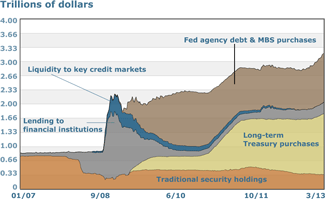
While unconventional monetary policies have been appropriately anti-cyclical in ACs implementing them, they have had inappropriately pro-cyclical consequences on EMs -- boosting credit and demand when most economies among the latter were already heated up, and threatening to accentuate a slowdown where it started to happen.

Continue ReadingQE Tapering as a Wake-up Call for Emerging Markets

Emerging Markets Selloff: What’s Next?

The adjustment to the “normalization” of the US monetary policy may end up being not as disruptive as many analysts are expecting. It will depend on the pace of recovery in the US economy and/or the smoothness of China’s adjustment-cum-slowdown . However, to fully overcome the current turmoil, EMs must not lose sight of their country-specific reform agendas.

Continue ReadingEmerging Markets Selloff: What’s Next?

Currency War and Peace

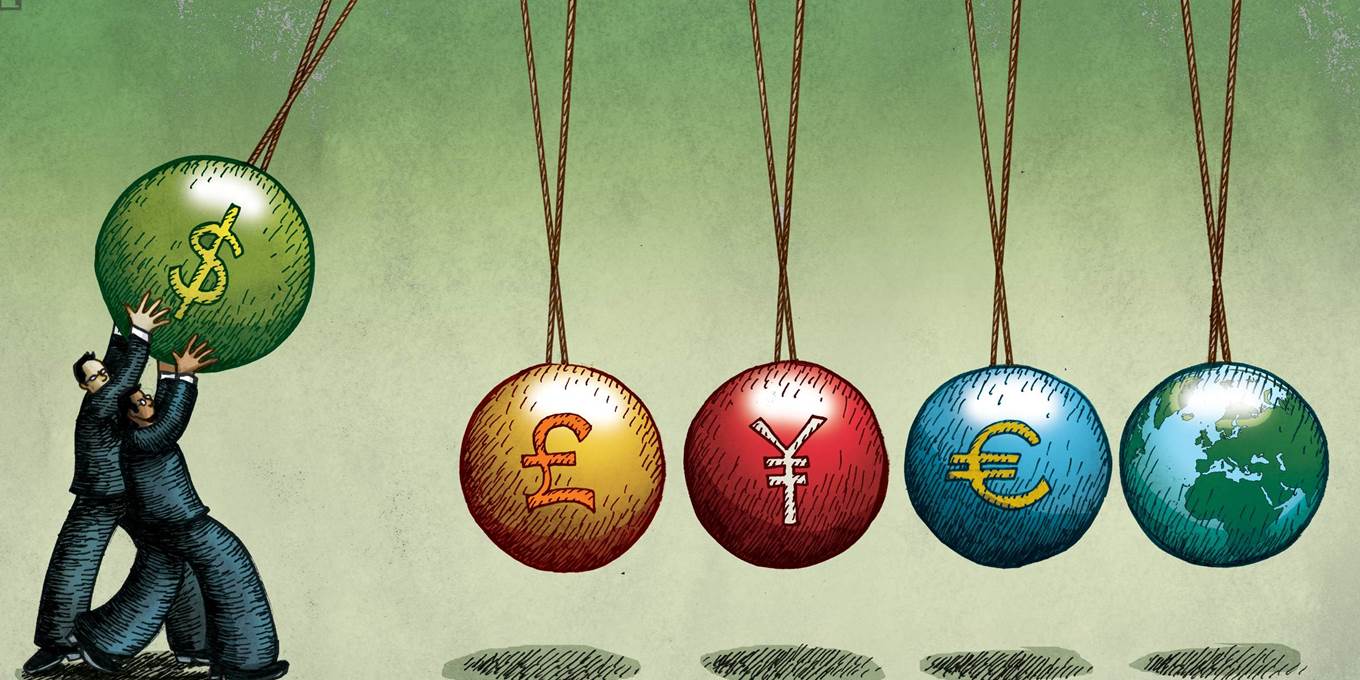
The discussions at last month’s G-20 meeting of finance ministers were dominated by anxiety over so-called “currency wars.” But, to escape the crisis, global leaders must shift their focus to channeling the massive liquidity that advanced countries' controversial monetary policies have generated toward long-term investment financing.

Continue ReadingCurrency War and Peace