The fiasco of Mr. Trump’s emergency tariffs

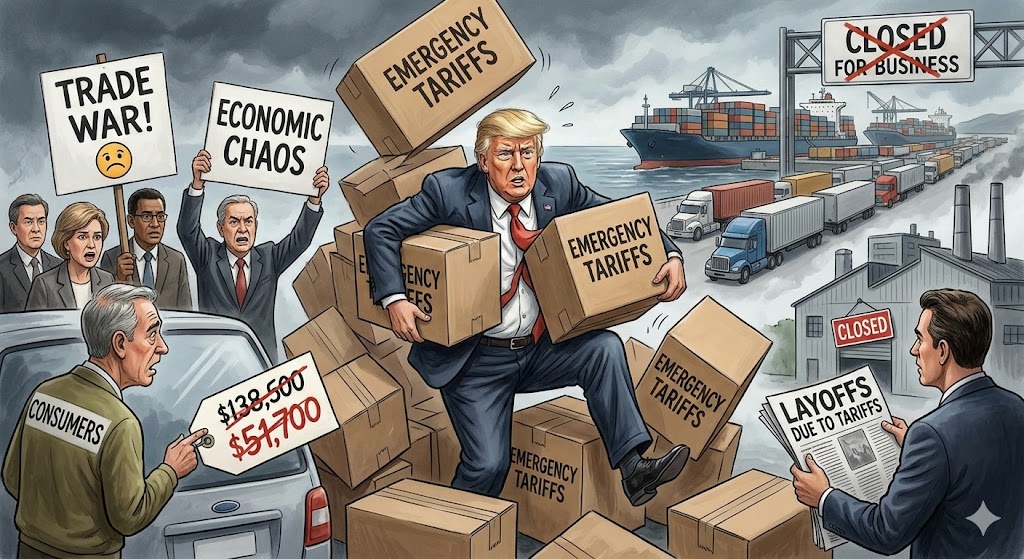
The IEEPA tariff journey did not end well. It turned out to be an illegal tax based on flawed economic principles, was reluctantly revoked under belated legal pressure, and compensated those who were said to be the object of "punishment."  The insistence on seeking punishment through other legal means risks extending the fiasco, keeping uncertainty high along the way.

Continue ReadingThe fiasco of Mr. Trump’s emergency tariffs

The Multiple Frontlines of the U.S.-China Technological Rivalry

The U.S.–China technological rivalry has become a central axis of global economic and geopolitical competition. While the United States continues to lead in frontier innovation—most notably in advanced semiconductors and artificial intelligence (AI)—China has consolidated strengths in large-scale implementation, manufacturing capacity, and control over critical segments of global supply chains. These advantages are especially visible in clean energy technologies and in the processing and refinement of critical minerals and rare earths. The rivalry now unfolds across multiple frontlines, extending beyond innovation itself to encompass infrastructure, energy availability, and technology deployment across the New South. Its outcome will depend less on breakthrough inventions alone than on each country’s capacity to integrate technology, industrial policy, and energy systems into cohesive national strategies.

Continue ReadingThe Multiple Frontlines of the U.S.-China Technological Rivalry

The Silent Majority of the New South: Small States, Davos 2026, and the Last Line of International Law

This article examines the quiet but profound implications of the erosion of U.S.-led hegemony for small and vulnerable states of the New South. While the post-1945 international order was never egalitarian, it offered predictability: power was organized through law, and sovereignty for weaker states rested less on justice than on procedural stability. Davos 2026 marked a turning point in the public acknowledgment of that system’s unraveling. Statements by leading Western figures revealed not a revolt against American power, but a growing recognition that the United States is increasingly retreating from the obligations that once distinguished hegemony from dominance. As rules give way to discretion, and institutions to transactional bargaining, the capacity of states to navigate global disorder is becoming sharply unequal. The article argues that this shift is existential for small states—particularly in the Middle East and North Africa—whose sovereignty depends almost entirely on international law and multilateral institutions. Unlike middle powers, they lack buffers, leverage, and visibility; their vulnerability rarely translates into voice. Climate change, debt distress, and security dependence deepen this asymmetry, making legal obligation—not power—their primary shield. Far from idealism, international law functions for these states as the infrastructure of survival. The weakening or bypassing of multilateral rules thus constitutes a systemic stress test: not of global morality, but of global stability. If the last line of international law collapses, the resulting order will not be more realistic—it will be more coercive, exclusionary, and ultimately less durable.

Continue ReadingThe Silent Majority of the New South: Small States, Davos 2026, and the Last Line of International Law

The American Industrial Transformation: Beyond the Deindustrialization Myth

What the U.S. has lost in domestic manufacturing, it may have gained in global productive presence. Understanding the transformation of U.S. manufacturing requires an assessment of the revolutionary impact of technology. Tomorrow’s industrial jobs require completely different qualifications from yesterday’s, and even successful production reshoring wouldn't necessarily restore the industrial employment levels of previous decades. Some confusion about U.S. ‘deindustrialization’ also arises from how sectoral GDP is measured. A significant share of value added in industrial production, especially high-value activities, is classified as ‘services’. The deindustrialization narrative, and the political platform of ‘Make America Great Again’ by reindustrializing it, reflects an identification between the evolution of U.S. manufacturing during globalization and the unequal appropriation of economic gains by the top of the income pyramid. The real strategic question for the U.S. isn't how to compete with China in low value-added goods production, but how to maintain and expand its leadership in high-tech segments, design, innovation, and global value chain coordination.

Continue ReadingThe American Industrial Transformation: Beyond the Deindustrialization Myth

The global economy is on a two-way track

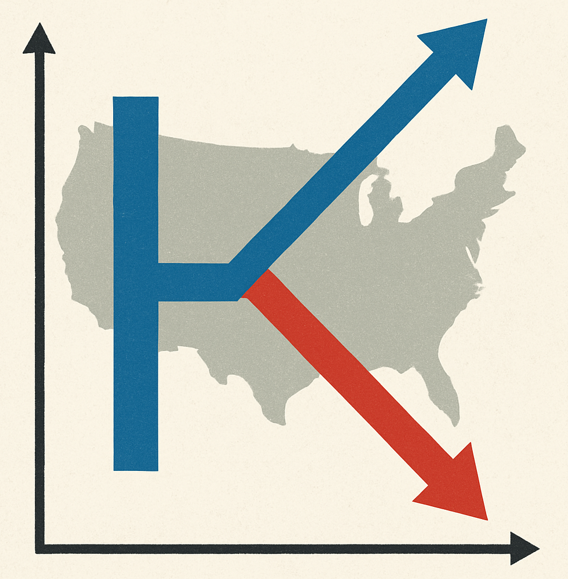
Global economic growth has been more resilient than expected, as the artificial intelligence-led growth seems to be compensating for the negative impacts of trade conflicts. Overstretched asset values and slowing jobs growth may be signaling that the balanced crossing of those two paths will be challenged.

Continue ReadingThe global economy is on a two-way track

The U.S. Tariff Saga Hasn’t Reached Its Climax Yet

The Trump tariff saga hasn't reached its climax yet, but a shift in import sources is evident. Regarding the trade balance, everything will depend on the continuation of the boom driven by high-tech investment. The harmful effects of tariffs on the rest of the economy will take time to unfold.

Continue ReadingThe U.S. Tariff Saga Hasn’t Reached Its Climax Yet

De-dollarization, Local Currencies, and External Financial Defense

The international monetary system has been dominated by the U.S. dollar since the Second World War. The hegemony of the greenback cut across the end of the dollar exchange standard established by the Bretton Woods Agreement, and came out from the global financial crisis—and the euro crisis—even stronger than before. The euro area and China are taking steps to strengthen the international role of their currencies, but surmounting the inner strength of the dollar-based monetary system cannot be taken for granted. This is visible in two aspects of the rising profiles of competitors to the dollar-based system: the growing use of local currencies in cross-border payments between China and other countries—particularly the BRICS—and the role played by the euro and the renminbi in cross-country financial safety nets.

Continue ReadingDe-dollarization, Local Currencies, and External Financial Defense

Brazil As a Special Target of President Trump’s Tariff Hikes

The costs of Brazilian tariff retaliation would likely be high for its economy, because of risks of even higher U.S. tariffs and because of Brazil’s domestic use of current imports from the U.S. At the same time, it is unimaginable that Brazil will fall into the trap of accepting a ‘political’ negotiation plan. Brazil will have to count on some eventual support from U.S. domestic opponents of the tariffs, in addition to any other trade matters that may come up in bilateral conversations between Lula and Trump that may take place in the near future. Beyond that, Brazil will just have to bite the bullet.

Continue ReadingBrazil As a Special Target of President Trump’s Tariff Hikes

Africa’s Minerals Will Shape the Future of Global Power

As the US-China rivalry intensifies, both powers are courting mineral-rich African countries in an effort to secure critical raw materials. Translating Africa's vast natural-resource wealth into lasting development requires an infrastructure-led strategy that delivers long-term value for local communities.

Continue ReadingAfrica’s Minerals Will Shape the Future of Global Power

The Spring of Tariff Regret

The IMF has reviewed the global growth downward, highlighting the impacts of Trump's tariff war and warning about financial and economic risks. Although the negative effects of tariffs have already been “somewhat priced in,” according to Tobias Adrian (IMF), equity and bond prices could “certainly” fall further if negotiations fail. So, it’s either successful negotiations or further stress and downgrades.

Continue ReadingThe Spring of Tariff Regret

The U.S. Elections Will Have Worldwide Economic Consequences

Kamala and Trump have different proposals regarding tariffs, taxes, energy and immigration. If you believe that the ongoing global warming is due to carbon emissions and desire a transition to renewable energy worldwide, and if you believe that trade between countries is not a “zero-sum game”, you already know who you will be rooting for.

Continue ReadingThe U.S. Elections Will Have Worldwide Economic Consequences