Benign or malign reasons for the rise in long-term U.S. interest rates?

A word of caution is needed on the argument that rising Treasury yields reflect a stronger economy that will in due course pay for the public deficit. Deficits are aggravated by higher interest rates. And it remains a strong presumption that AI’s effects on productivity and growth will outweigh the revenue shortfall from tariffs and the tax exemptions in the One Big Beautiful Bill Act passed by the Trump administration in 2025.

Continue ReadingBenign or malign reasons for the rise in long-term U.S. interest rates?

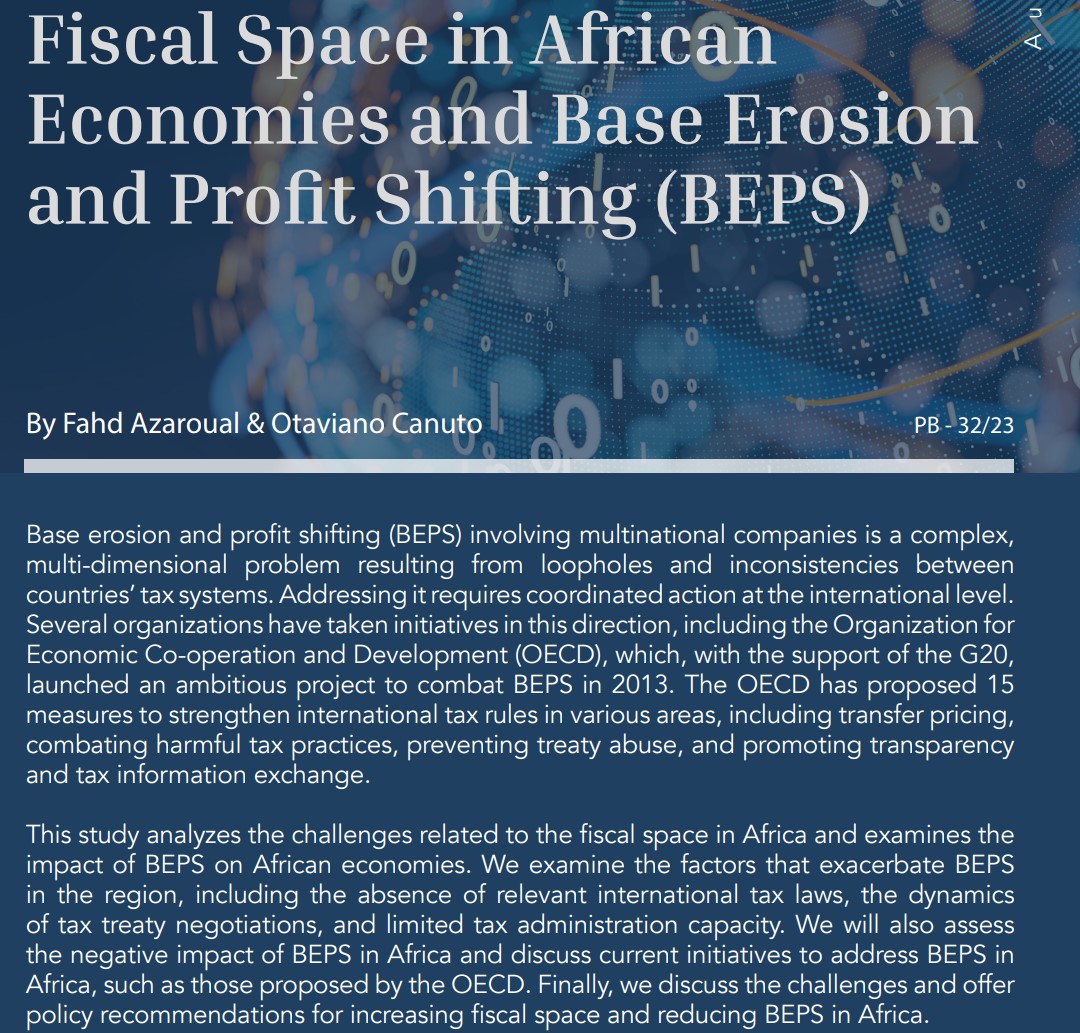
Fiscal Space in African Economies and Base Erosion and Profit Shifting (BEPS)

Base erosion and profit shifting (BEPS) involving multinational companies is a complex, multi-dimensional problem resulting from loopholes and inconsistencies between countries’ tax systems. Addressing it requires coordinated action at the international level. Several organizations have taken initiatives in this direction, including the Organization for Economic Co-operation and Development (OECD), which, with the support of the G20, launched an ambitious project to combat BEPS in 2013. The OECD has proposed 15 measures to strengthen international tax rules in various areas, including transfer pricing, combating harmful tax practices, preventing treaty abuse, and promoting transparency and tax information exchange. This study analyzes the challenges related to the fiscal space in Africa and examines the impact of BEPS on African economies. We examine the factors that exacerbate BEPS in the region, including the absence of relevant international tax laws, the dynamics of tax treaty negotiations, and limited tax administration capacity. We will also assess the negative impact of BEPS in Africa and discuss current initiatives to address BEPS in Africa, such as those proposed by the OECD. Finally, we discuss the challenges and offer policy recommendations for increasing fiscal space and reducing BEPS in Africa.

Continue ReadingFiscal Space in African Economies and Base Erosion and Profit Shifting (BEPS)

An “unthinkable” U.S. public debt default

The nominal debt ceiling is a crude and rudimentary barrier against excess public debt in the United States. Hope remains that the White House and Republicans will reach a deal on raising the debt ceiling in time to avoid what Secretary Yellen called "unthinkable" and "catastrophic". Some framework to deal with fiscal matters is needed, instead of nominal spending caps. But this transition need not happen via financial shocks and a possible default on public debt.

Continue ReadingAn “unthinkable” U.S. public debt default

The size of Biden’s fiscal package

According to Treasury Secretary Janet Yellen, it would be better to run the risk of excess than insufficiency. In addition, the Federal Reserve's new monetary policy regime puts the 2% inflation target as an average, not as a ceiling forcing monetary policy to act to prevent it in advance. After a long period of inflation below 2%, even in years with low unemployment and interest rates on the floor, monetary authorities can afford to wait some time with above-average inflation until they are compelled to pull the brake.

Continue ReadingThe size of Biden’s fiscal package

Evidence-Based Design of Fiscal Policies for Gender Equality

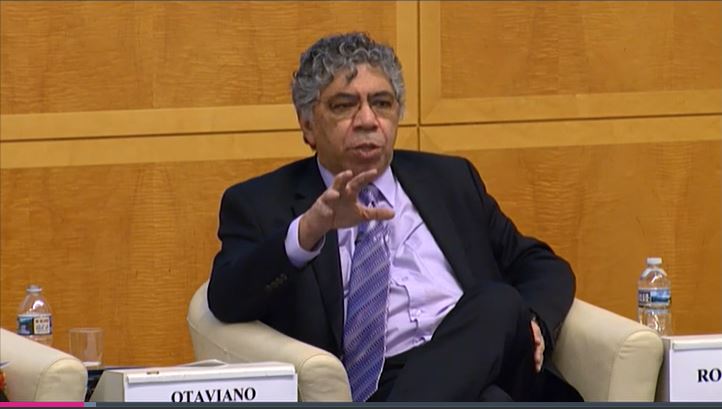
Evidence-Based Design of Fiscal Policies for Gender Equality SPEAKERS Sanjeev Gupta, Deputy Director IMF Fiscal Affairs Department (Moderator) Mayra Buvinic, Senior Fellow Center for Global Development Otaviano Canuto, World Bank Executive Director Stephan Klasen, Professor University of Gottingen Rohini Pande, Professor Harvard University

Continue ReadingEvidence-Based Design of Fiscal Policies for Gender Equality

A straightjacket to Help Brazil Fight Fiscal Obesity

Brazil’s GDP contraction since mid-2014 has multiple non-fiscal roots but it has morphed into an unsustainable fiscal trajectory. Dealing with the latter has become a precondition for full economic recovery and the Brazilian government has submitted to Congress a constitutional amendment bill mandating a public spending cap for the next 20 years. This piece considers how the Brazilian landscape evolved toward such a precipice and why additional reforms – particularly on pensions – will have to be implemented to make the spending cap feasible.

Continue ReadingA straightjacket to Help Brazil Fight Fiscal Obesity

When it comes to fiscal policy, it’s better to save for a rainy day than to let it pour

  While pro-cyclical fiscal policies – ie. expansionary fiscal policies in booms and contractionary fiscal stances in downturns – remain a common feature among developing countries, some countries have recently…

Continue ReadingWhen it comes to fiscal policy, it’s better to save for a rainy day than to let it pour