The global economy is on a two-way track

Global economic growth has been more resilient than expected, as the artificial intelligence-led growth seems to be compensating for the negative impacts of trade conflicts. Overstretched asset values and slowing jobs growth may be signaling that the balanced crossing of those two paths will be challenged.

Continue ReadingThe global economy is on a two-way track

BRICS in Times of Tectonic Shifts

This article assesses the economic performance of the original BRICS economies, relative to the growth and currency appreciation projections presented in the papers that introduced the acronym, prior to the grouping becoming a diplomatic, political, and economic reality. It also discusses the BRICS agenda in the current challenging geopolitical context, in which economic fragmentation tends to raise costs for the global economy and presents considerable obstacles for emerging and developing economies.

Continue ReadingBRICS in Times of Tectonic Shifts

Asian Economic Integration Led by Trade Liberalization: A Lesson for Other Regions

Developing countries have few options to deal with the ongoing tariff war amid unpredictable shifts in global supply chains. However, regional economic integration offers a strategic path of development in these uncertain and challenging times. Helped by geographical proximity and cultural familiarity, countries in a region can benefit greatly from promoting trade with one another, reaping the benefits of comparative advantages and economies of scale—if they are able to establish a large enough single market. Asia has successfully used regional cooperation and integration as stepping stones in its interactions with the rest of the world during the course of its economic development. Asia can thus offer lessons that other regions—especially Africa and Latin America—can benefit from.

Continue ReadingAsian Economic Integration Led by Trade Liberalization: A Lesson for Other Regions

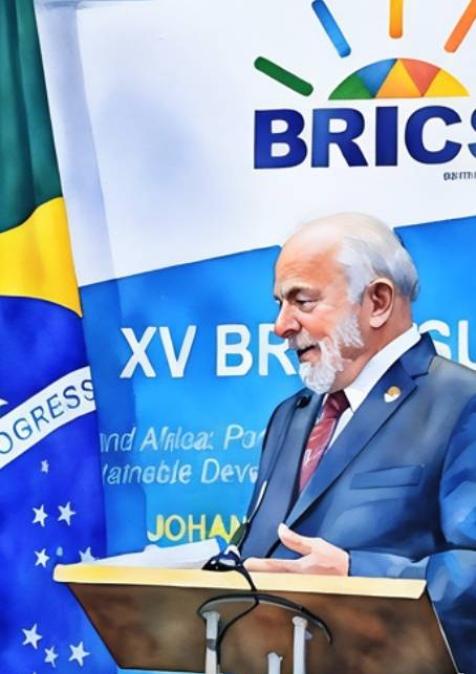
Lula’s BRICS balancing acts in Rio

Despite the exercise of BRICS balancing act, President Donald Trump threatened "extra 10% tariff over ‘anti-American’ BRICS policies". And, last week, he threatened to impose a 50% tariff on Brazil, making references to the legal process against former President Jair Bolsonaro for a planned coup plot, as well as to measures taken by Brazil’s Supreme Court against U.S .social media platforms. Presumably, from Mr. Trump’s perspective, pursuing lower reliance on the US dollar was enough to push Lula and the BRICS off their balancing act.

Continue ReadingLula’s BRICS balancing acts in Rio

The Global Impact of President Trump’s Reciprocal Tariffs: Implications for Developing Countries

President Donald Trump's "Reciprocal Tariff" policy, announced on April 2, 2025 (dubbed "Liberation Day"), represents one of the most significant shifts in U.S. trade policy in nearly a century. Trump’s policy imposes a baseline 10% tariff on all imports and additional country-specific tariffs that range from 10% to 50% for countries designated as having "non-reciprocal trading practices" with the U.S. These specific tariffs are determined based on each country’s bilateral trade balance with the U.S. Postponements and bilateral trade negotiations started after April 9, 2025. This paper develops a two-country general equilibrium model to analyze the economic implications of the originally announced “Reciprocal Tariff” policy, with particular emphasis on developing countries. Initially characterized by a trade deficit in the U.S. and asymmetric tariff structures, the model explores the effects of the U.S. unilaterally raising its tariffs to match those of its trading partners. We incorporate comparative advantage (CA), sectoral heterogeneity, and the interaction of tariff policy with monetary policy. The results suggest that while tariff equalization can reduce trade imbalances and improve U.S. terms of trade, it generates efficiency losses and results in ambiguous welfare outcomes. A calibrated policy mix is required to balance trade, inflation, growth, and equity objectives. While the administration framed these tariff reciprocal measures as essential for addressing trade imbalances and strengthening American manufacturing, our analysis identifies significant economic repercussions for developing economies. Key findings include the disproportionate impact on developing nations with export-oriented growth strategies, disruption of global value chains, potential reversal of development gains, and acute vulnerability for many African and Asian nations that face some of the highest tariff rates. The policy would likely trigger structural economic changes in the global trading system, with implications that extend well beyond the immediate tariff impacts.
Continue ReadingThe Global Impact of President Trump’s Reciprocal Tariffs: Implications for Developing Countries

From Bretton Woods to Braided Path: Navigating MDB Dynamics Amid Global Shifts

Within an ever-evolving system of multilateral development banks (MDB) currently reshaped by four structural geo-economic trends, the emergence of new MDBs like the Asian Infrastructure Investment Bank (AIIB) and the New Development Bank (NDB) carries great geopolitical significance. Yet the new MDBs, attuned to institutional and operational realities, have not upended the MDB system. Their relationship with long-established MDBs such as the World Bank currently resembles not a fork in the road, but a braided path–marked by both convergence and divergence, cooperation and manageable competition.

Continue ReadingFrom Bretton Woods to Braided Path: Navigating MDB Dynamics Amid Global Shifts

Growth Implications of a Fractured Trading System

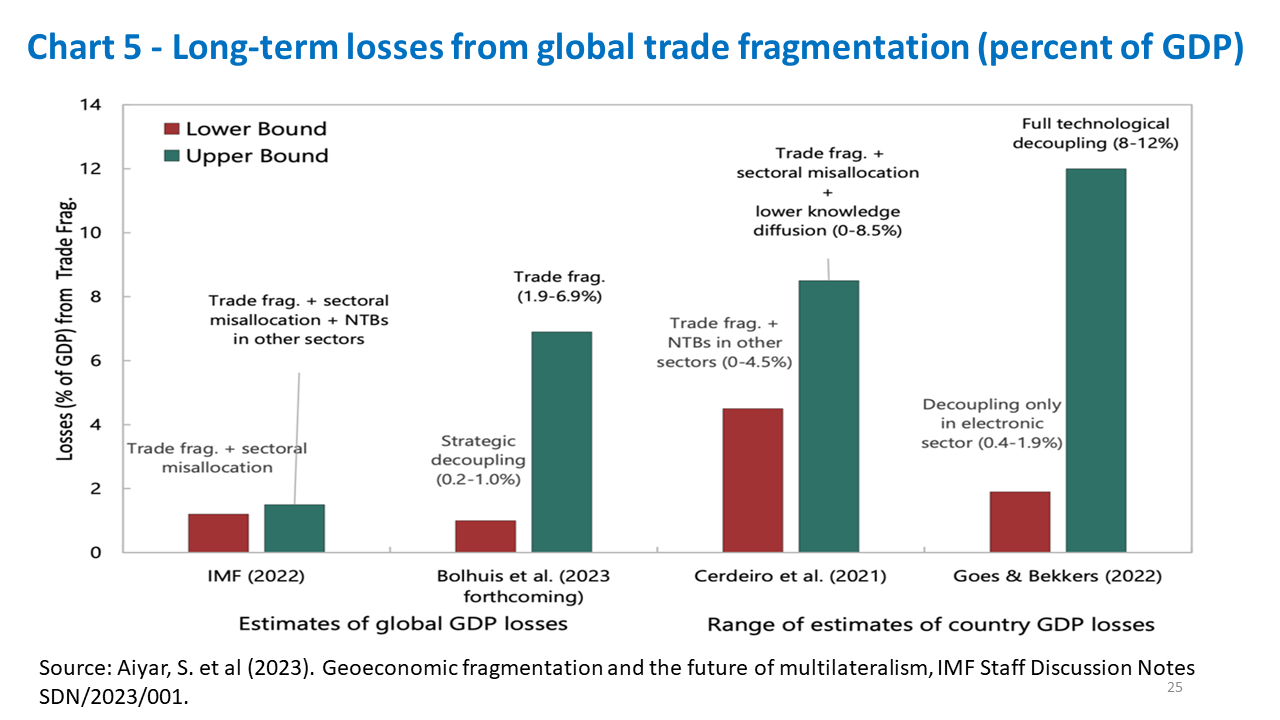
- The costs are greater the deeper the trade fragmentation. - Reduced knowledge diffusion due to technological decoupling is a powerful negative amplifier of the trade channel. - Emerging markets and low-income countries are most at risk from trade and technology fragmentation. - Transition costs can be considerable, in some cases even exceeding the final trading impact. - The estimates provided are not the upper bound. The G20 might not address issues of national security directly, but there's much they can do, especially regarding the trade-offs between resilience and efficiency, designing policies to avoid resorting to the least discretionary breadth.

Continue ReadingGrowth Implications of a Fractured Trading System

The Third Plenum and China’s Economic Growth Challenges

• China's economy grew 4.7% in Q2, with a target set at 5% for 2024. • Challenges include real estate sector exhaustion, local government debt, domestic demand, and external resistance to exports. • The Third Plenum highlights reforms for housing, fiscal policy, and addressing challenges, but lacks focus on stimulating consumption.

Continue ReadingThe Third Plenum and China’s Economic Growth Challenges

China’s Economic Growth on Target Despite Challenges

IMF projects China's economic growth at 4.6% and 4.1% for this year and next. China's official target is 5%. Six challenges to China's economic growth include the real estate sector, local government debt, domestic demand, external resistance to China's exports, change in foreign investor sentiment, and demographic decline. Despite challenges, China's economic growth remained steady in Q1 2024, with exports and manufacturing investment compensating for the drag from the property sector.

Continue ReadingChina’s Economic Growth on Target Despite Challenges

Emerging Markets and Developing Economies in the Global Financial Safety Net

When countries face external financial shocks, they must rely on financial buffers to counter such shocks. The global financial safety net is the set of institutions and arrangements that provide lines of defense for economies against such shocks. From any individual country standpoint, there are three lines of defense in their external financial safety nets: international reserves, pooled resources (swap lines and plurilateral financing arrangements), and the International Monetary Fund. We argue here that there is a need to extend and facilitate access to the ultimate global financial safety net layer: the IMF. We illustrate that by pointing out how Morocco and Mexico have boosted their defensive power by having access to IMF precautionary lines of credit.

Continue ReadingEmerging Markets and Developing Economies in the Global Financial Safety Net

Rising Use of Local Currencies in Cross-Border Payments

Pairs of countries have agreed to settle commercial and financial transactions with each other in their local currencies, usually facilitated through bilateral agreements between their central banks. China has been able to use its currency to settle half of its foreign trade and investment transactions. The growing use of local currencies in external payments will be part of what we have already called a “slow and bounded de-dollarization”. A partial fragmentation of the global payments system is underway.

Continue ReadingRising Use of Local Currencies in Cross-Border Payments

The global economy faces a lost decade

The economic factors that have propelled global prosperity over the past three decades are losing their grip. The aging and slow growth of the global workforce are highlighted as downward factors, explaining half of the expected slowdown in potential GDP growth through 2030. What should countries do in the face of this prospect of a “lost decade”?

Continue ReadingThe global economy faces a lost decade

Will Latin America Return to Mediocre Growth After Shocks?

Latin America's recovery after the perfect storm should not be limited to a simple return to pre-pandemic "mediocre" levels of output growth. Investments in green infrastructure, exploring areas of digital connectivity opened by the pandemic, and improving the business environment and education can lead to more resilient, inclusive, and dynamic growth patterns.

Continue ReadingWill Latin America Return to Mediocre Growth After Shocks?

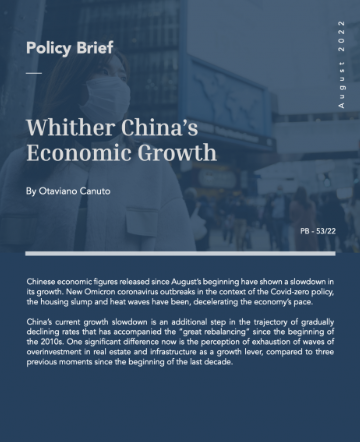
Whither China’s Economic Growth

Chinese economic figures released since August’s beginning have shown a slowdown in its growth. New Omicron coronavirus outbreaks in the context of the Covid-zero policy, the housing slump and heat waves have been decelerating the economy’s pace. China’s current growth slowdown is an additional step in the trajectory of gradually declining rates that has accompanied the “great rebalancing” since the beginning of the 2010s. One major difference now is the perception of exhaustion of waves of overinvestment in real estate and infrastructure as a lever, as compared to three previous moments since the beginning of the last decade.

Continue ReadingWhither China’s Economic Growth