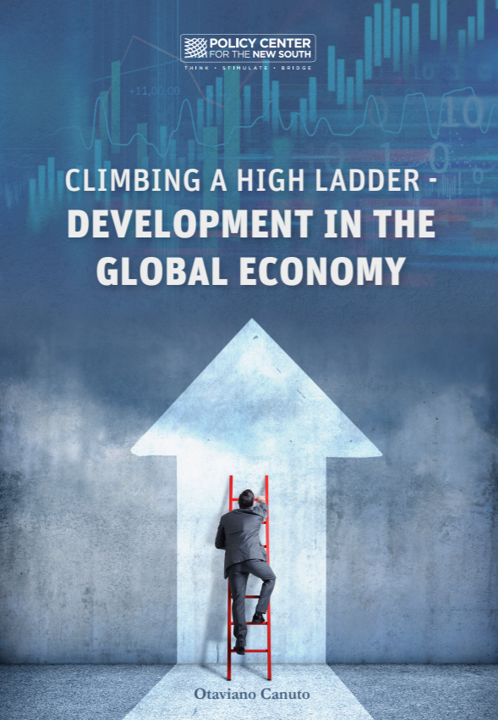
Climbing a High Ladder – Development in the Global Economy

This book approaches the opportunities and challenges faced by developing countries to raise their per capita income levels during the recent phase of globalization. After dealing with the post-global financial crisis economic landscape in advanced economies, it deals with the windows of opportunity opened by trade and financial globalization for developing countries to climb the income ladder. Domestic preconditions for a developing country to benefit from those windows are then pointed out. China, Brazil, and Sub-Saharan Africa are presented as case studies. The book ends with an assessment of the impact of the coronavirus crisis on the global economy.


Continue ReadingClimbing a High Ladder – Development in the Global Economy

Brazil at a Post-Pandemic Macroeconomic Crossroads

Moving forward—or not—with structural reforms aimed at enhancing fiscal adjustment and lifting private investment will define whether a sustainable—or unsustainable—growth-cum-debt trajectory will prevail in Brazil in the next decade. The extent to which its economy regains its attractiveness for foreign investors will play a key role.

Continue ReadingBrazil at a Post-Pandemic Macroeconomic Crossroads

The two sides of capital flows to Brazil

There was a significant inflow of funds in Brazil's external financial account in October and November for investments in both stocks and fixed income instruments. The bulk of the recent inflow has come in a “passive” way, and it did not include considerable volume on the side of “active” investors. For the wave to unfold in the availability of external resources to finance investments in the country, progress and confidence in the domestic fiscal and regulatory agenda will be relevant.

Continue ReadingThe two sides of capital flows to Brazil

Public financing of green innovation: Matchmaking of offers and demand for financing + Economic and Political Impacts of COVID-19 on BRICS Countries

Public financing of green innovation: Matchmaking of offers and demand for financing - Relevant recent literature states that direct and pervasive public financing has been instrumental in the development of innovative technological trajectories. The reasoning builds on: (i) the presence of finance from public sources across the entire innovation chain; (ii) the concept of ‘mission-oriented’ policies that have created new technological and industrial landscapes; and (iii) the entrepreneurial and lead investor role of public actors, willing and able to take on extreme risks, independent of the business cycle. On the other hand, public financing depends largely on the availability of funds. The available capital (human or otherwise) for different jurisdictions is different, which may motivate a case for heterogeneity of policies regarding innovation funding. ------------------- Economic and Political Impacts of COVID-19 on BRICS Countries The event, organized by GEBRICS/USP and the Department of International and Comparative Law (DIN) of the Faculty of Law, University of São Paulo, aims to bring together professors, researches, specialists and diplomatic representatives from all BRICS countries

Continue ReadingPublic financing of green innovation: Matchmaking of offers and demand for financing + Economic and Political Impacts of COVID-19 on BRICS Countries

Brazilian Economic and Political Outlook 2020/2021+ Economic Development and Global Value Chains Insertion: a view from Brazil and South Korea

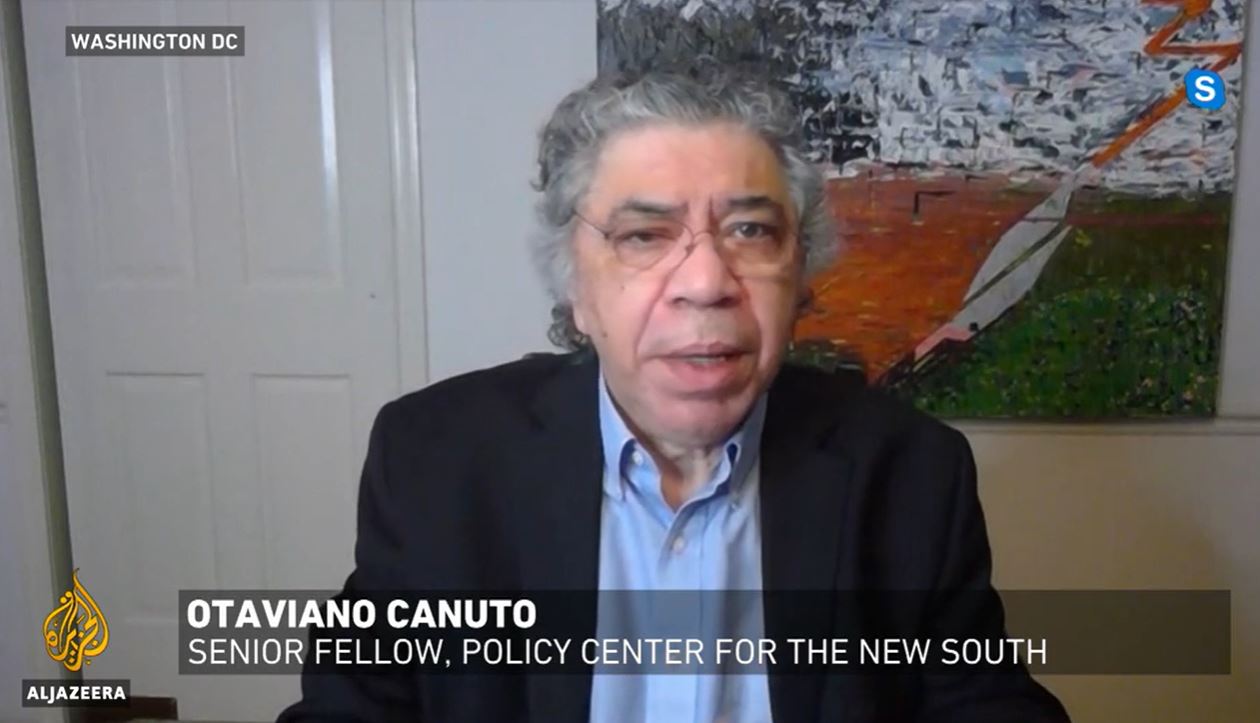
Brazilian Economic and Political Outlook: The discussion about the Economic and Political Outlook 2020/2021, was moderated by John Welch, Executive Director of the Brazilian American Chamber of Commerce in NY, the Dunn Liberty Fellow in Economics at The King’s College, and Member of the Board of the Brazil-Canada Chamber of Commerce, with the participation of Christopher Garman, Managing Director at Eurasia, Andrea Gardella, Senior Economist at Export Development Canada and Otaviano Canuto, Principal, Center for Macroeconomics for Development. -------------------------- Economic Development and Global Value Chains Insertion: a view from Brazil and South Korea: Speakers: Otaviano Canuto - Senior Fellow at the Policy Center for the New South; Joonkoo Lee - Professor, Hanyang University. Moderator: Leonardo Paz Neves - Intelligence Analyst, International Intelligence Unit, Fundação Getulio Vargas

Continue ReadingBrazilian Economic and Political Outlook 2020/2021+ Economic Development and Global Value Chains Insertion: a view from Brazil and South Korea

Why is President Bolsonaro’s popularity on the rise in Brazil?

Despite downplaying the seriousness of COVID-19, Brazil’s president’s approval rating is at its highest since he took office. Brazil has the world’s second-highest number of coronavirus deaths after the United States. President Jair Bolsonaro’s dismissive stance has helped oversee the coronavirus’ rapid spread, with more than four million cases and 135,000 deaths rocking the country. Millions have lost their jobs and the economy is in recession. But support from the poor has made Bolsonaro’s popularity rocket to its highest level since he took office in 2018. So what is the reason for this?

Continue ReadingWhy is President Bolsonaro’s popularity on the rise in Brazil?

Brazil, South Korea: Two Tales of Climbing an Income Ladder

The “middle income trap” may well characterize the experience of Brazil and most of Latin America since the 1980s. Conversely, South Korea maintained its pace of evolution, reaching a high-income status. Such divergence of economic growth can be related to their distinctive performances of domestic accumulation of technological and organizational capabilities. Their different approaches to global value chains and trade globalization reinforced such discrepancy in domestic accumulation processes.

Continue ReadingBrazil, South Korea: Two Tales of Climbing an Income Ladder

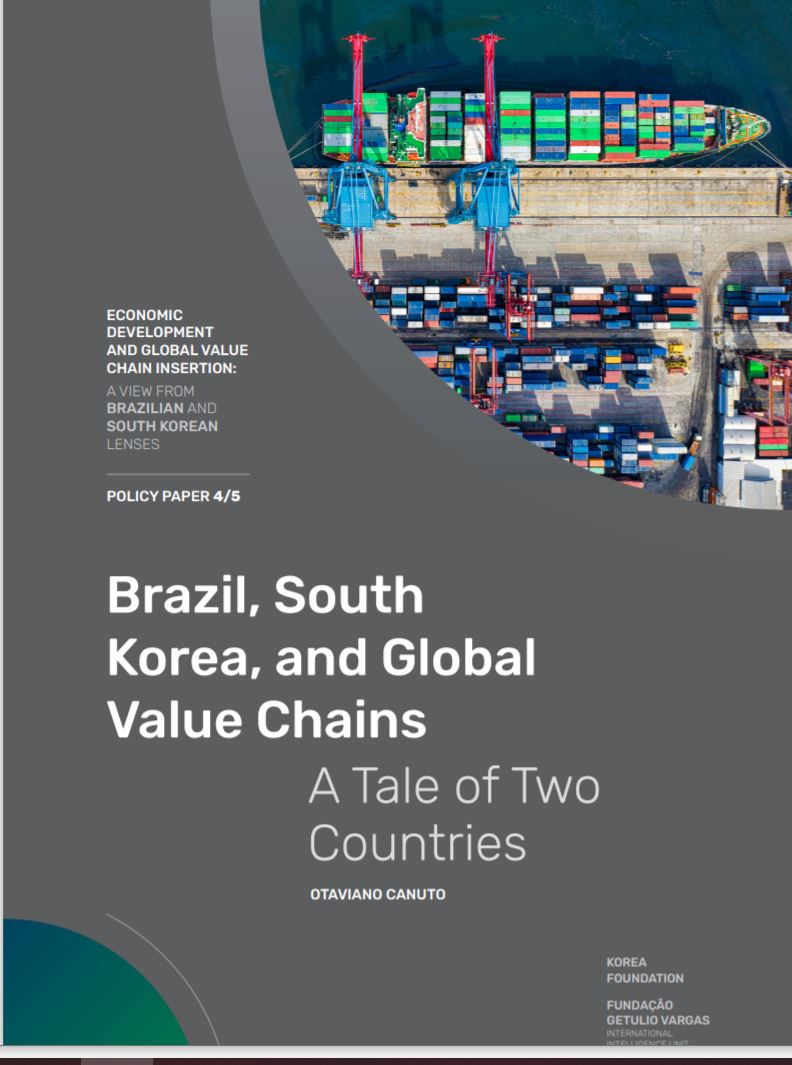
Brazil, South Korea, and Global Value Chains: A Tale of Two Countries

South Korea has climbed the income per capita ladder up to high levels, while Brazil may be considered a case of a “middle-income trap”. Such divergence of economic growth performances can be related to their distinctive approaches to global value chains and trade globalization, as well as to domestic accumulation of technological and organizational capabilities.

Continue ReadingBrazil, South Korea, and Global Value Chains: A Tale of Two Countries
Read more about the article Brazil’s Economic Crossroads: Which Path Will It Choose?
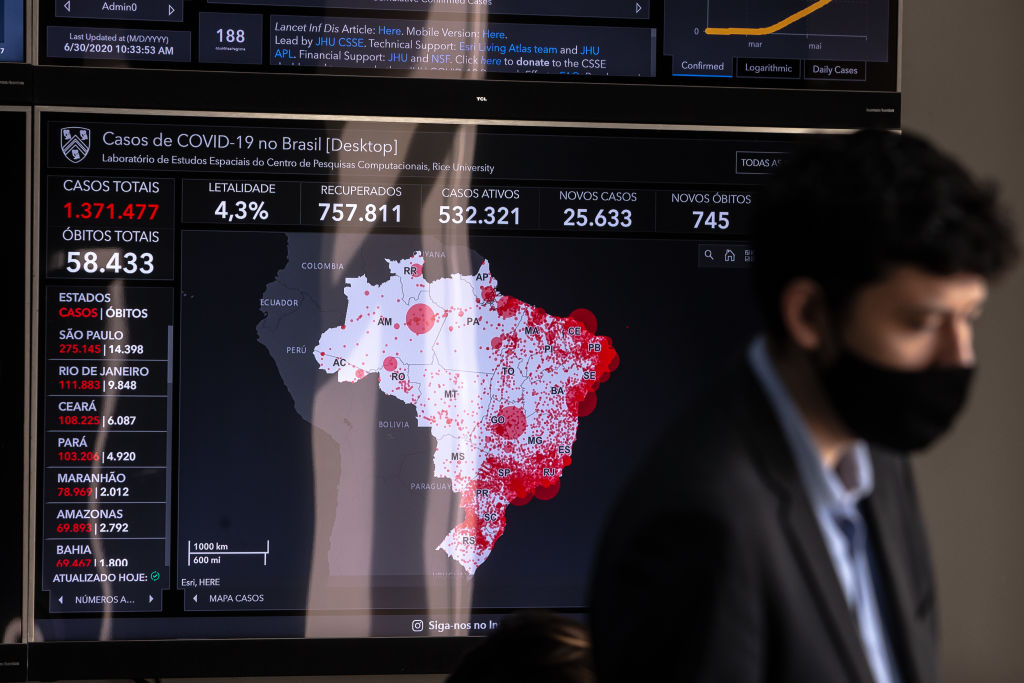
A screen displays data inside the Ministry of Science, Innovation, Technology and Communication's (MCTIC) crisis management command center in Sao Paulo, Brazil, on Tuesday, June 30, 2020. Brazil's telecommunications operators have provided the government with geolocation data to help monitor population mobility, concentration and risk of contamination in an effort to help stop the spread of the coronavirus. Photographer: Jonne Roriz/Bloomberg via Getty Images

Brazil’s Economic Crossroads: Which Path Will It Choose?

The scar of COVID-19 will take a long time to heal. And the country will also have to battle on the economic side, where the impact will be deep and long-lasting. Starting from a jump in the already high level of debt in relation to its GDP, coming from both sides of the equation: spending has skyrocketed while a steep decline in its gross domestic product is expected for this year. A combination of a credible return to the fiscal adjustment path and investment-friendly structural reforms would also have the additional positive effect of making possible new rounds of foreign capital inflows. That would reinforce the likelihood that the Brazilian economy will go down the optimistic path of growth and debt, rather than the pessimistic one.

Continue ReadingBrazil’s Economic Crossroads: Which Path Will It Choose?

Brazil 2020-21: Predictions and Perspectives

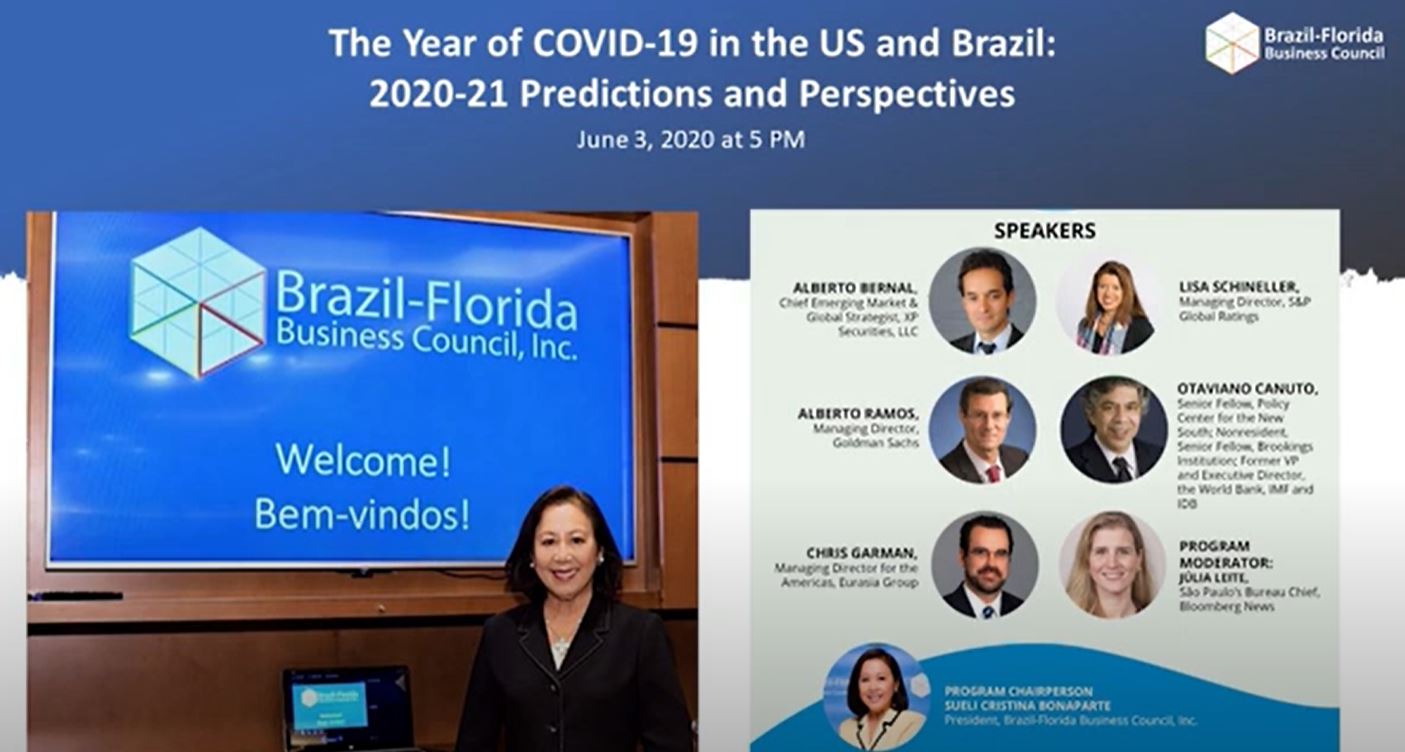
Brazil-Florida Business Council 2020-21: Predictions and Perspectives Join us to hear from this spectacular assemble of celebrated speakers on their predictions and perspectives for 2020-21 in the US and Brazil, as both economies are struggling during a global health and economic pandemic: Alberto Ramos, Alberto Bernal, Lisa Schineller, Otaviano Canuto, and Christopher Garman. Program moderator: Julia Leite

Continue ReadingBrazil 2020-21: Predictions and Perspectives

Is Brazil’s Bolsonaro the ‘Trump of the Tropics?’

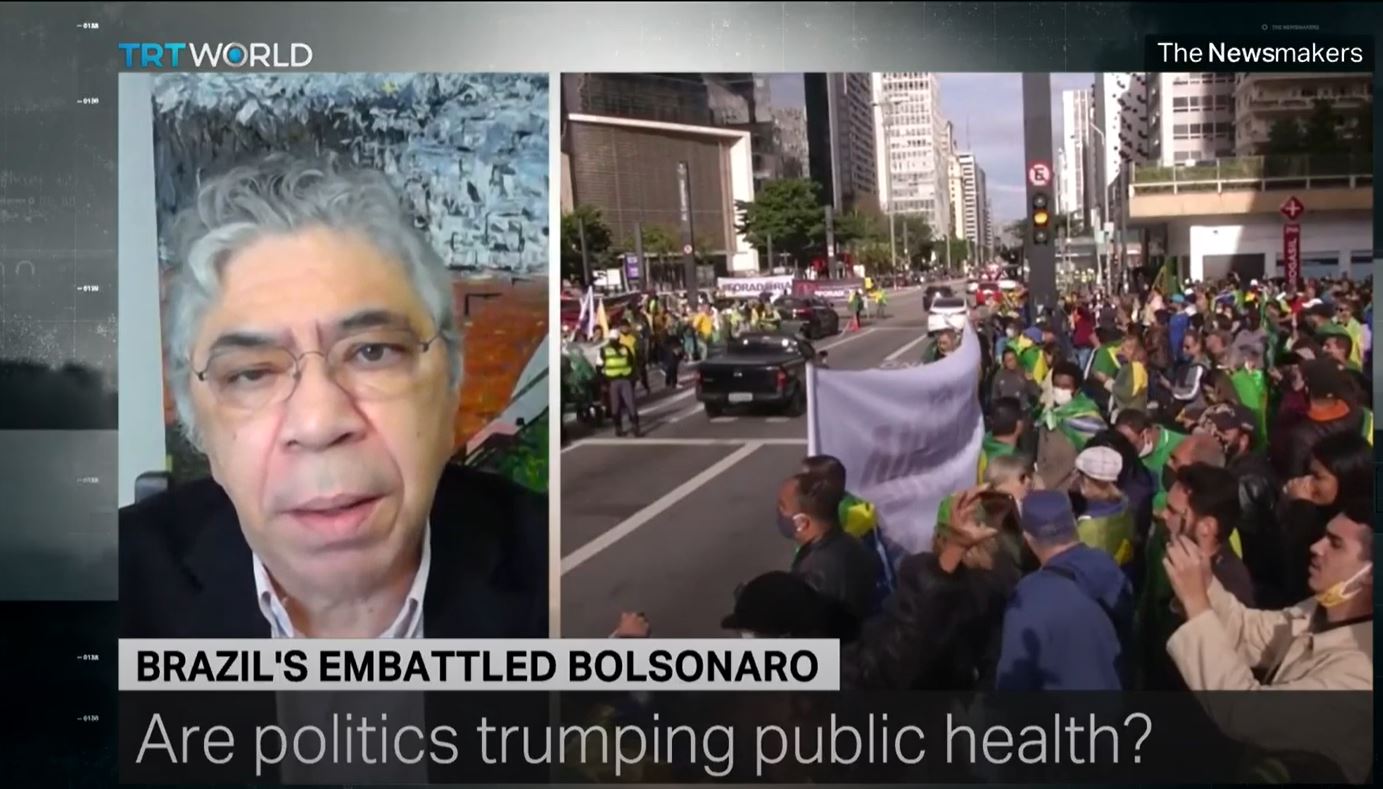
The Newsmakers 'So what? What do you want me to do?' is how Brazil's President Jair Bolsonaro responded when asked about the skyrocketing number of coronavirus cases in the country. He calls it 'the little flu' and has blamed everyone from his health minister to the media for the crisis. So, is this right-wing populist placing his political survival above the health and welfare of the people? Guests: Guests: Otaviano Canuto Former Vice President of the World Bank Chayenne Polimedio Fellow with the Political Reform Program at New America Julio Morais Executive Director for the Public Administration Institution

Continue ReadingIs Brazil’s Bolsonaro the ‘Trump of the Tropics?’

Does the Brazilian policy for oil revenues distribution foster investment in human capital?

This paper assesses the effect of oil revenues on health and education indicators (measures for human capital) in the Brazilian municipalities using exogenous oil price variations. The Oil Law of 1997, apart from to hugely increase the amount of oil revenues distributed to the eligible municipalities due to the withdraw of the internal control price system, broadened its possible uses by the eligible municipalities, including investments in health and education in addition to traditional investments in infrastructure. Since Brazil has decentralized primary education and primary health care provision to the municipalities, we use the oil price as an external intervention in local economies to identify the effect of the non-renewed natural resources in promoting sustainable growth. We also explore the high inequality in oil revenues distribution among municipalities. Similar to the previous literature, our results point to a small improvement of the human capital indicators in the long run. The contribution of the largest oil revenue recipients, however, is null for these indicators.

Continue ReadingDoes the Brazilian policy for oil revenues distribution foster investment in human capital?

Coronavirus: Denying a Crisis

Both US President Donald Trump and Brazil's leader Jair Bolsonaro face fierce criticism for their response to the coronavirus outbreak. As other nations accepted the advice of experts and went into lockdown to try to stop the spread, Brazil and the United States were almost carrying on as normal. In the UK, Prime Minister Boris Johnson may not have denied the seriousness of COVID-19, but his initial approach of taking it on the chin was a risky one. Could their inaction have cost lives? Guests: James Wallner Senior Fellow at the R Street Institute Otaviano Canuto Former Vice President of the World Bank Dr Bharat Pankhania Senior Clinical Lecturer at the University of Exeter Medical School

Continue ReadingCoronavirus: Denying a Crisis
Read more about the article Brazil’s Biggest Economic Risk Is Complacency
PRISCILA ZAMBOTTO

Brazil’s Biggest Economic Risk Is Complacency

This year can be a decisive one for Brazil’s transition to a more robust and sustainable growth path – but only if the government commits to fiscal and structural reform. If Brazil’s leaders fail to take this opportunity to lay the foundations for long-term prosperity, it may not be long before the economy stalls again.

Continue ReadingBrazil’s Biggest Economic Risk Is Complacency