
The US-China trade truce: a time-out or a possible armistice?
The US-China trade truce will become a time-out or an armistice pending on China's response regarding technology policy The trade truce between the United States and China, announced…

The US-China trade truce will become a time-out or an armistice pending on China's response regarding technology policy The trade truce between the United States and China, announced…
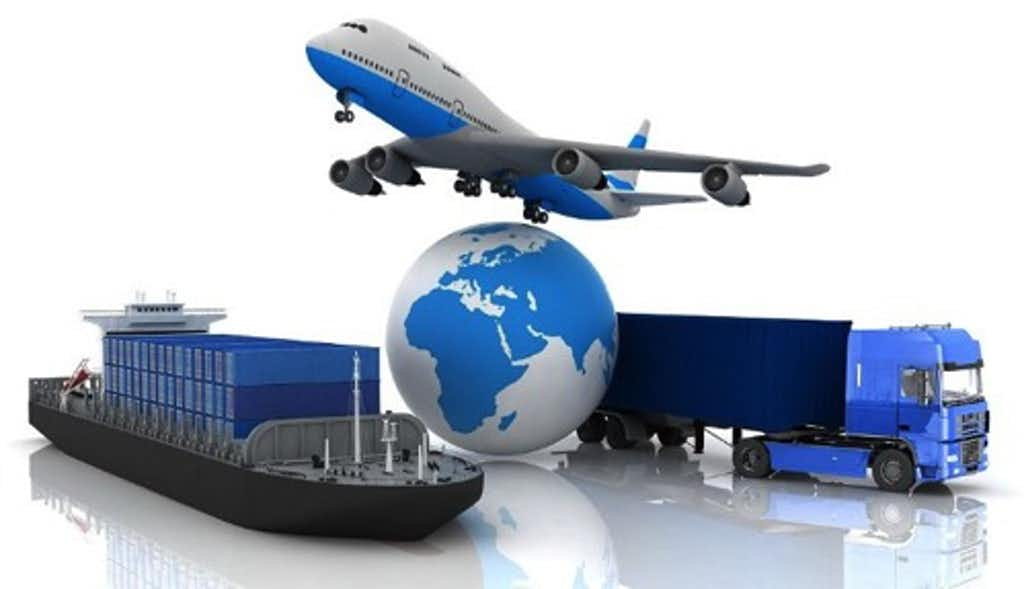
08 August 2018 The Brazilian economy pays a price in terms of productivity foregone because of its lack of trade openness. A trade opening process would bring an adjustment…

3 July 2018 - Otaviano Canuto How innovation can flow from globalisation il issue of the International Monetary Fund's World Economic Outlook included a chapter on how globalisation has…

08 May 2018 - Otaviano Canuto The April issue of the IMF’s “World Economic Outlook (WEO)” included a chapter on how globalization has helped knowledge from technology leaders spread…
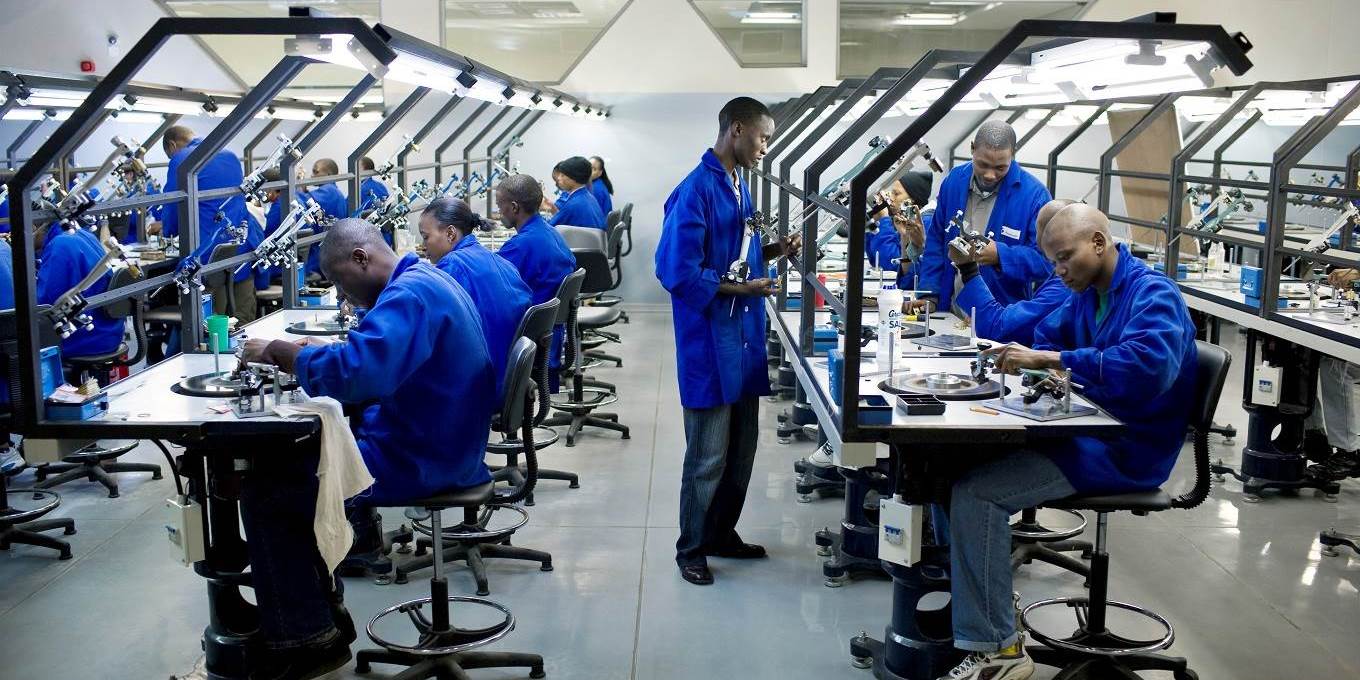
As a growth strategy for low-income countries, the efficacy of traditional manufacturing is waning. To compete in the technology-driven global economy of the future, developing countries will need new models to increase productivity and put people to work.
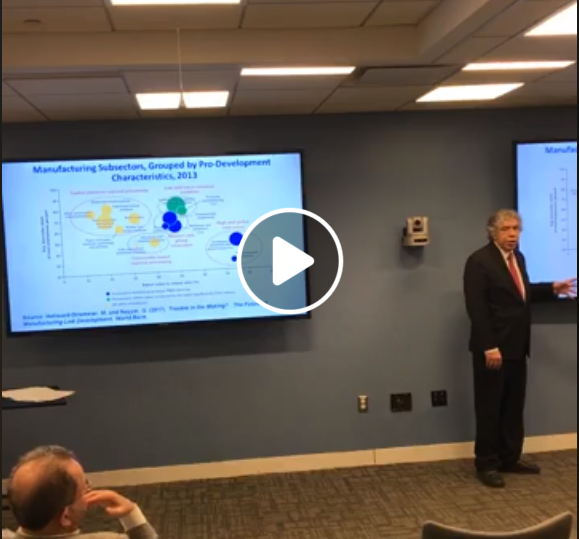
George Washington University GWU Institute for International Science and Technology Policy Live stream of the IISTP Seminar of Parallel, Overlapping Globalizations with Otaviano Canuto of the World Bank Click…
GLOBALISATION SERIES: FUTURE OF TRADE AND PROTECTIONISM Tue 24 Oct 2017 OMFIF Focus Podcast – Globalisation series: ‘Future of trade and protectionism’. Otaviano Canuto, executive director of the World Bank,…
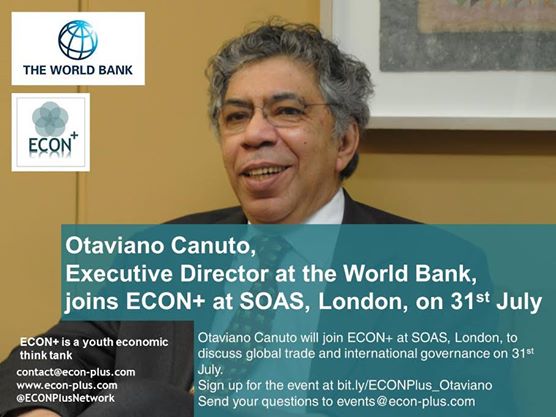
Otaviano Canuto, World Bank on Trade and Governanceat SOAS University of London. https://www.facebook.com/econ.plus/videos/1436406076414654/

Financial markets seem to believe that president-elect Trump can deliver higher growth and inflation, as manifested in the rotation from bonds to equities. At the same time, the shock waves already felt by assets abroad may be a harbinger of the bumpy and treacherous journey ahead.

Global imbalances have not gone away as an issue, as they reveal that the global economic recovery may have been sub-par because of asymmetric excess surpluses in some countries and output below potential in many others. The end of the “era of global imbalances” may have been called too early. Lord Keynes’ argument about the asymmetry of adjustments between deficit and surplus economies remains stronger than ever.
Project Syndicate Prospects for growth in global trade in 2016 and 2017 have been downgraded again. The World Trade Organization (WTO) now expects that trade this year will increase…

11 August 2016 - Otaviano Canuto The Chinese economy is rebalancing while softening its growth pace. China’s spillovers on the global economy have operated through trade, commodity prices, and…
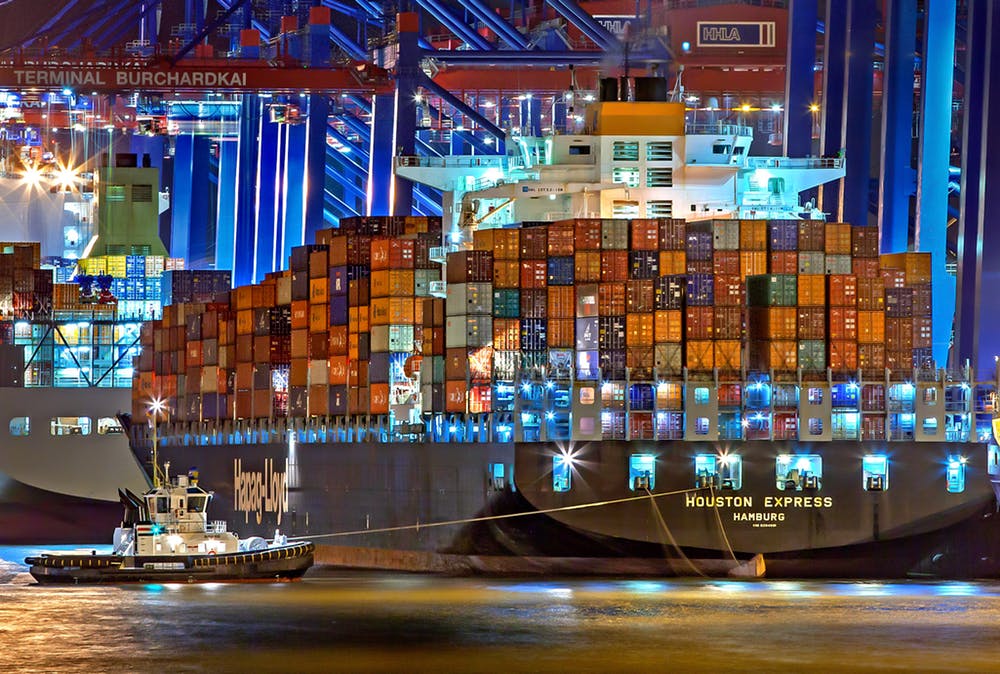
Capital Finance International, spring 2016 World trade suffered another disappointing year in 2015, experiencing a contraction in merchandise trade volumes during the first half and only a low recovery…

For centuries, Latin America’s economies have revolved around exporting commodities – be it digging up minerals and hydrocarbons, planting soya or coffee, or taking advantage of what animals leave behind,…

Trade has been a key driver of global growth, income convergence, and poverty reduction. Both developing countries and emerging market economies have benefited from opportunities to transfer technology from…