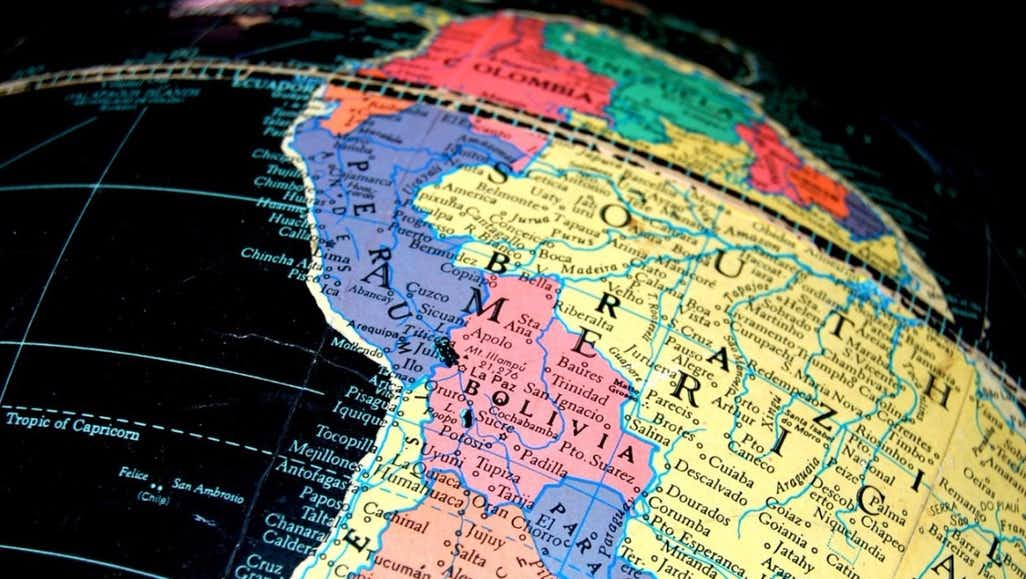
Latin American economies face political crossroads in 2018
10 janeiro 2018 - Otaviano Canuto The cruise speed with which Latin American economies are starting 2018 will be constrained by low investments and weak productivity growth in the…

10 janeiro 2018 - Otaviano Canuto The cruise speed with which Latin American economies are starting 2018 will be constrained by low investments and weak productivity growth in the…

Enlarge Chart There is a sizeable gap between the world economy's infrastructure needs and available financing. The shortfall is especially pronounced in emerging markets. Infrastructure investment has fallen short…

There is a sizeable gap between the world economy’s infrastructure needs and available financing. The shortfall is especially pronounced in emerging markets. Infrastructure investment has fallen short of what is needed to support…

15 July 2017 - Otaviano Canuto, Aleksandra Liaplina The world economy – and emerging market and developing economies in particular – display a gap between their infrastructure needs and the…

Trade has been a key driver of global growth, income convergence, and poverty reduction. Both developing countries and emerging market economies have benefited from opportunities to transfer technology from…

This paper studies the growth effects of externalities associated with intergenerational health transmission, health persistence, and access to infrastructure (or lack thereof), which affects women's occupational choices. Following a brief review of the evidence on these issues, a gender-based overlapping generations (OLG) model of endogenous growth that captures these interactions is presented and its properties characterized. The endogeneity of mothers’ rearing time and rearing costs implies that improved access to infrastructure has in general an ambiguous effect on growth. Numerical experiments, based on a calibrated version of the model for low-income countries, show that it is possible for higher investment in infrastructure to actually reduce the steady-state growth rate. The possibility of multiple equilibria induced by an endogenous survival rate is also discussed, and so is the role of public policy in that context.

It has become increasingly evident over the last two years that the growth engine of the Brazilian economy has run out of steam. Despite relative resilience during the global…

Policy makers in the advanced economies at the core of the global financial crisis can make the claim that they prevented a new “Great Depression”. However, recovery since the outbreak of the crisis more than five years ago has been sluggish and feeble. Since these macroeconomic outcomes have to some extent been shaped by policy mixes adopted in those economies in response to the crisis, the appropriateness of those policy choices is a question worth revisiting. This is particularly the case as one considers the hypothesis that a long-run trend toward stagnation may have already been at play during the pre-crisis period, even if temporarily countervailed by pervasive asset price booms.

In the aftermath of the recent global financial crisis, advanced economies have continued to experience sluggish growth. Is this slow postcrisis growth the result of a policy response that was overly reliant on monetary policy, which ran into the zero interest rate lower bound before growth was restored? Looking deeper, is secular stagnation, which is related to the zero lower bound and was recently brought to the fore by Larry Summers, another potential cause for advanced economies’ failure to return to precrisis growth levels? This note seeks to answer these questions as well as identify what alternative policies might be pursued by advanced economies to escape secular stagnation, should stagnation proponents be proven correct. After a brief review of secular stagnation, Summers’ hypothesis is tested through a review of academic literature and opinion pieces. However, the secular stagnation theory is not without its critics; moreover, there is a debate between “Keynesian versus Schumpeterian” economists, which could help to shed light on the medium-term postcrisis outlook.

There is a core divergence among some “Keynesian” and “Schumpeterian” economists who have proposed such stagnation hypotheses; each camp points to different underlying factors for continued anemic levels of growth. “Keynesians” argue from the demand side, and believe that proactive fiscal policies are needed for a strong recovery, while “Schumpeterians” believe that the necessary force of creative destruction has continually been stymied by such policies.

Countercyclical moves by policy makers might have reduced the length and size of the observed output gap had fiscal policy operated as a countercyclical tool complementary to monetary policy. Regardless of whether restrictive fiscal policies have been a necessity or an option, the fact is that they have constituted a major factor leading to a subpar recovery performance.

Project Syndicate One often hears that Brazil’s economy is stuck in the “middle-income trap.” Since the debt crisis of the 1980’s, Brazil has failed to revive the structural transformation and…
The global economy looks poised to display better growth performance in 2014. Leading indicators are pointing upward – or at least to stability – in major growth poles. However, for this to translate into reality policymakers will need to be nimble enough to calibrate responses to idiosyncratic challenges.

Not long ago, many economists were anticipating a switchover in the global economy's main engines, with autonomous sources of growth in developing economies compensating for the drag of struggling advanced economies. But, in the last few months, enthusiasm about these economies’ prospects has given way to bleak forecasts.
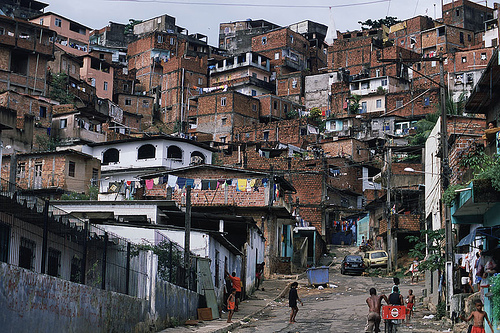
Brazil’s GDP performance has been lackluster since the post-crisis rebound in 2010. Prospects for 2013 look a little better: unemployment rates have remained low, and data from the first…